.svg)
.svg)


Coordinating engineering teams across time zones presents real challenges. Questions take hours instead of minutes to answer. Code reviews sit waiting for feedback. Production issues at 3pm your time hit at 6pm theirs—or worse, after they've logged off.
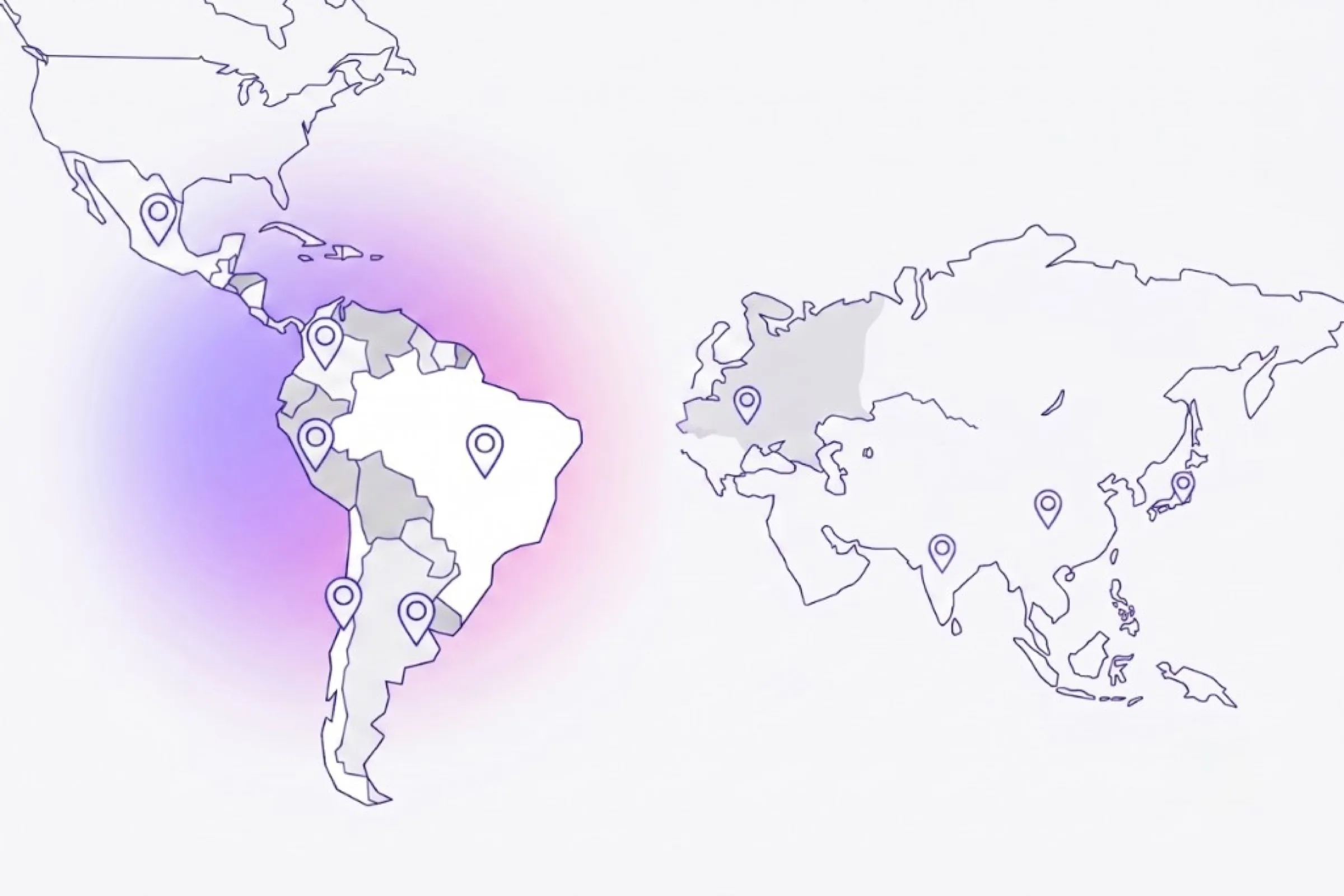
But distributed teams also create advantages when managed effectively. The key is matching your team composition and processes to your time zone strategy. For US startups, this usually means choosing between offshore development (8-12 hour time differences) and nearshore development (0-3 hour overlap)—and the difference matters enormously.
The Time Zone Tradeoff: Nearshore vs. Offshore
Time zone differences create friction. The question is how much friction you can productively absorb.
Offshore Time Zones: Maximum Asynchronous Work
Offshore development (India, Eastern Europe, Southeast Asia) typically means 8-12 hour time zone differences from US teams. A developer in Bangalore starts work as your San Francisco team is going to sleep.
This creates limited real-time overlap. Maybe 1-2 hours at the beginning or end of someone's day. Most collaboration happens asynchronously: messages get answered the next day, code reviews happen overnight, blockers take 24 hours to resolve.
Offshore works when:
- Requirements are extremely clear and stable
- Projects can proceed independently without frequent input
- You have robust asynchronous processes and documentation
- The work is on mature products where architectural context is well-established
Offshore struggles when:
- Products require rapid iteration and frequent direction changes
- Blockers need immediate resolution to maintain momentum
- Developers need regular collaboration with product managers, designers, or customers
- You're building greenfield products where architectural decisions emerge through discussion
Nearshore Time Zones: Strategic Overlap with Async Flexibility
Nearshore development (LATAM for US companies) typically means 0-3 hour time zone differences. A developer in Buenos Aires or Mexico City has 6-8 hours of overlap with US teams.
This creates genuine collaboration windows while still supporting asynchronous work. Morning standups happen in real-time. Slack conversations get immediate responses. Production issues can be debugged collaboratively.
Nearshore provides:
- Real-time collaboration when you need it
- Asynchronous flexibility when it's more efficient
- Ability to unblock developers quickly during overlapping hours
- Natural handoffs for follow-the-sun coverage if needed
The strategic advantage: You get cost savings (40-60% compared to US developers) without sacrificing collaboration velocity. This matters enormously for product development requiring iteration and rapid feedback loops.
Building Processes for Distributed Team Success
Distributed teams require more explicit processes than co-located teams. Assumptions that would be clarified in casual hallway conversations need to be documented. Information that would spread organically needs structured sharing.
Asynchronous Communication as Default
Optimize for asynchronous communication first, use synchronous selectively.
Asynchronous communication (Slack messages, code comments, design docs, pull request descriptions) lets people work at their own pace and creates searchable records. Synchronous communication (meetings, video calls, pair programming) provides bandwidth for complex discussions but doesn't scale.
Asynchronous communication best practices:
Write comprehensive context. Don't assume everyone has the background knowledge you have. Pull request descriptions should explain not just what changed but why. Slack messages should provide enough context that someone reading later can understand without asking follow-up questions.
Document decisions, not just outcomes. When architectural decisions get made in a Slack thread or video call, document the reasoning in a persistent location (design doc, ADR, wiki). Future team members need to understand why decisions were made, not just what was decided.
Create discoverability. Information is worthless if people can't find it. Establish clear conventions for where different types of information live and make search work.
Set response time expectations. "Asynchronous" doesn't mean "whenever I feel like it." Establish norms: Slack messages get acknowledged within 4 hours during working hours. Code reviews happen within 24 hours. Urgent issues get escalated through specific channels.
Update status proactively. Don't make people chase you for updates. When you're blocked, say so immediately. When you complete something, communicate it. When priorities shift, notify affected people.
Maximize Overlapping Hours
With nearshore teams, you have 6-8 hours of potential overlap. Use this time strategically.
Reserve overlap time for high-bandwidth collaboration:
- Standups and sprint planning
- Architecture discussions requiring back-and-forth
- Unblocking developers stuck on complex issues
- Pair programming on critical or risky changes
- Incident response and production debugging
Push low-bandwidth work outside overlap:
- Code reviews (asynchronous by nature)
- Status updates (write them, don't meet about them)
- Individual focused work
- Documentation
Establish "collaboration hours." Consider designating specific windows (e.g., 10am-2pm US time) when everyone tries to be available for real-time discussion. Outside these windows, async is default.
Unblocking Strategies for Distributed Teams
Blockers that would take 5 minutes to resolve co-located can take 24 hours distributed if you're not intentional about it.
Anticipate blockers before they happen:
- Break work into smaller pieces. The larger the task, the more likely a mid-task blocker derails progress. Smaller tasks can complete even if questions arise.
- Identify dependencies early. If your work depends on another team or external system, flag this before starting, not when you're blocked.
- Provide context proactively. When handing off work, document assumptions, edge cases, and potential gotchas. Don't make people discover these through trial and error.
Create escalation paths for urgent blockers:
- Define what constitutes "urgent" (production down, customer-impacting bug, blocking critical path work)
- Establish clear escalation channels (specific Slack channel, on-call rotation, direct messages to leads)
- Set expectations that urgent blockers get immediate attention even outside normal hours
Build in redundancy:
- Cross-train team members so knowledge isn't siloed with individuals
- Document tribal knowledge before it becomes a blocker
- Ensure multiple people can review code, deploy changes, or debug production issues
Empower autonomous problem-solving:
- Give developers permission to make reasonable assumptions and proceed when perfect information isn't available
- Encourage "bias toward action" over waiting for explicit approval
- Make it safe to make reversible decisions independently
This last point—autonomous problem-solving—requires hiring the right people.
Hiring for Autonomy: Why Senior Developers Matter More in Distributed Teams
Co-located teams can absorb less experienced developers because guidance happens naturally. Someone stuck can tap a senior developer on the shoulder. Architectural questions get answered in hallway conversations. Code quality issues surface in casual code reviews.
Distributed teams can't rely on casual osmosis. They need developers who can work effectively without constant oversight.
The Seniority Difference in Distributed Contexts
Junior developers need frequent guidance:
- How should this be architected?
- Which approach is better?
- Is this code good enough to merge?
- What should I work on next?
In co-located teams, this guidance happens naturally. In distributed teams, each question becomes an async exchange that can take hours or days to resolve. Development velocity plummets.
Senior developers (IC4-IC6) work autonomously:
- They make reasonable architectural decisions without constant input
- They evaluate tradeoffs independently and escalate when truly uncertain
- They write code that passes review on first attempt most of the time
- They prioritize work independently based on project goals
- They unblock themselves by researching, experimenting, or making reasonable assumptions
This autonomy matters exponentially more in distributed teams. A senior developer can maintain full productivity with 2-3 hours of overlap for standup and critical discussions. A junior developer needs 6+ hours of availability for mentoring and guidance.
Hiring for Distributed Team Success
When building distributed teams, prioritize:
Proven experience in distributed or remote environments. Have they worked on distributed teams before? Do they understand async communication? Can they manage their own time effectively?
Strong written communication skills. Can they write clear pull request descriptions? Do they document their thinking? Can they explain complex technical concepts in writing?
Self-direction and initiative. When they hit a blocker, do they wait for someone to solve it or do they attempt multiple approaches? Do they raise their hand when stuck or silently struggle?
Judgment and decision-making. Can they evaluate tradeoffs independently? Do they know when a decision needs input vs. when to proceed autonomously?
Technical depth. Do they have the expertise to work independently in your stack? Can they debug issues without hand-holding?
These qualities correlate strongly with experience level. That's why distributed teams benefit from higher ratios of senior to junior developers than co-located teams typically maintain.
Communication Tools and Practices
The right tools enable distributed work; the wrong tools create friction.
Essential Communication Stack
Asynchronous communication (Slack, Discord, Teams): Real-time messaging with threading, search, and persistence. Set clear norms about channels, response expectations, and when to use async vs. sync.
Video conferencing (Zoom, Meet, Teams): Essential for standups, planning sessions, and complex discussions. Record meetings so people can review if they miss them or need to reference decisions.
Documentation platform (Notion, Confluence, wiki): Persistent knowledge base for architectural decisions, runbooks, onboarding docs, and tribal knowledge. This is your distributed team's institutional memory.
Code collaboration (GitHub, GitLab, Bitbucket): Pull requests, code review, CI/CD integration. Robust PR descriptions and code comments become even more critical for distributed teams.
Project management (Linear, Jira, Asana): Shared visibility into work status, priorities, and blockers. Essential for async coordination.
Communication Best Practices
Default to public channels over DMs. Conversations in public channels create searchable records and let others learn from discussions. Reserve DMs for sensitive topics.
Write for future readers. Every Slack thread might be searched by someone months later trying to understand a decision. Write with that reader in mind.
Use threading aggressively. Keep Slack channels scannable by using threads for follow-up discussion rather than posting everything in main channel.
Communicate status proactively. Don't make people chase you for updates. Share progress, blockers, and completion in appropriate channels.
Establish meeting norms. Start on time, have clear agendas, document decisions, assign action items, record for people who can't attend.
Building Team Culture Across Distance
Distributed teams can't rely on casual water cooler conversations to build relationships and shared culture. You need to be intentional.
Regular video standups. Even if they could be async, face-to-face time builds connection. Keep them short (15 minutes) and focused.
Virtual social time. Schedule optional coffee chats, lunch-and-learns, or game sessions. Some people will join; that's fine. The goal is creating opportunities for connection.
In-person gatherings when possible. If budget permits, bring the team together quarterly or semi-annually. Face-to-face time builds rapport that sustains remote collaboration.
Celebrate wins publicly. Shipped a major feature? Fixed a critical bug? Acknowledge contributions publicly in team channels.
Create psychological safety. Make it safe to ask questions, admit mistakes, and raise concerns. Distributed teams need high trust to function effectively.
Why Nearshore Development Works Better for Product Teams
The advantages of nearshore development compound when you consider all the factors:
Time zone overlap enables:
- Real-time unblocking during critical development
- Synchronous collaboration when it adds value
- Faster iteration cycles and feedback loops
- Natural participation in team ceremonies and culture
Cultural alignment reduces:
- Communication friction from different workplace norms
- Misunderstandings from indirect communication styles
- Onboarding time to company culture and practices
English fluency enables:
- Technical discussions without language barriers
- Effective code review comments and documentation
- Clear stakeholder communication
Cost efficiency provides:
- 40-60% savings compared to US developers
- Ability to hire senior talent (IC4-IC6) at startup economics
- Sustainable long-term team composition
For growth-stage startups building products that require iteration, collaboration, and rapid feedback—nearshore development provides the optimal balance.
How Remotely Works for Distributed Team Building
Remotely connects US startups with senior LATAM developers who thrive in distributed, asynchronous environments.
Here's what's different:
Pre-Vetted for Distributed Work
Our network includes IC4-IC6 developers with proven experience in remote, distributed teams. These aren't developers learning remote work on your dime—they have established practices for async communication, autonomous work, and distributed collaboration.
Time Zone Advantage
LATAM developers work in time zones 0-3 hours from US zones. Your team gets real-time collaboration capability when it matters while maintaining async flexibility.
You Control Team Composition
We deliver 10-15 curated profiles within 48 hours. You interview using your standards, evaluating communication skills, autonomy, and cultural fit alongside technical capabilities.
Cost-Plus Model Supports Retention
You set compensation directly through our transparent cost-plus model. When developers become critical to your distributed team's success, you can reward them appropriately. Retention is in your hands.
Complete Operational Support
We handle international employment logistics—compliance, payroll, equipment procurement, contractor management. You focus on building great products with your distributed team.
Moving Forward with Distributed Development
Managing distributed teams effectively requires:
- Choosing time zones that match your collaboration needs (nearshore for product development)
- Building robust asynchronous communication practices
- Hiring senior developers who can work autonomously
- Maximizing overlapping hours for high-bandwidth collaboration
- Creating systems to unblock developers quickly
- Being intentional about team culture and connection
Get these elements right, and distributed teams can match or exceed the productivity of co-located teams while providing significant cost advantages.
Ready to build distributed engineering teams that move fast without sacrificing collaboration? Hire senior LATAM developers with Remotely and access nearshore talent with the time zone overlap, communication skills, and autonomy to thrive in distributed environments.