.svg)
.svg)


Off-the-shelf software solves common problems at scale. Custom software solves your specific problems exactly the way you need them solved. For growth-stage startups, custom software often determines competitive advantage—it's what lets you deliver unique value that generic tools can't replicate.
But custom software is only as good as the team building it. The difference between a successful custom software project and a failed one rarely comes down to technology choices. It comes down to developer experience, architectural judgment, and team dynamics.
Understanding Custom Software Development in 2026
Custom software development means building applications specifically designed for your business needs rather than adapting your processes to fit generic solutions.
The case for custom software has strengthened. Modern development tools, cloud infrastructure, and AI-assisted coding have reduced the cost and timeline for building custom solutions. What would have required 18 months and a large team five years ago might now take 6 months with a smaller group of experienced developers.
Custom Software vs. Off-the-Shelf Solutions
Off-the-shelf software optimizes for broad applicability. It solves 80% of the problem for 100% of customers. Custom software solves 100% of your specific problem.
When off-the-shelf makes sense:
- The problem is standardized across companies (email, project management, CRM for standard sales processes)
- You're early-stage and need to move fast with limited resources
- The vendor's roadmap aligns with your future needs
- Integration with your existing systems is straightforward
When custom software makes sense:
- Your competitive advantage depends on proprietary workflows or algorithms
- Off-the-shelf tools require extensive customization that negates their benefits
- You need tight integration with existing systems that vendors don't support
- Your data model or business logic is fundamentally different from industry standards
- Vendor lock-in or data ownership concerns are significant
The Real Costs of Custom Software
Custom software requires higher upfront investment than SaaS subscriptions. But total cost of ownership can be lower when you factor in:
- Elimination of per-seat licensing fees as you scale
- Avoided costs from workflow inefficiencies in generic tools
- Reduced need for integration middleware and data synchronization
- Complete control over feature prioritization and development timeline
- No vendor lock-in or forced migrations when products get discontinued
The risk isn't cost—it's execution. Failed custom software projects waste money and time. Successful ones create lasting competitive advantages.
Why Development Team Quality Determines Custom Software Success
Technology choices matter less than you think. Programming languages, frameworks, and databases are tools. What matters is the judgment, experience, and skill of the people using those tools.
The Experience Gap in Custom Software Development
Junior developers can build features. Senior developers build systems.
Custom software isn't about implementing isolated features—it's about creating sustainable systems that scale, integrate cleanly, and evolve over time. This requires architectural thinking that comes from years of experience.
What junior developers struggle with:
- Anticipating how requirements will change and designing for flexibility
- Understanding performance implications at scale
- Making technology choices that won't create problems 18 months later
- Designing APIs and data models that accommodate future needs
- Balancing technical debt against delivery timelines
What senior developers bring:
- Pattern recognition from building similar systems before
- Ability to evaluate tradeoffs between approaches
- Experience with what causes maintenance headaches later
- Understanding of when to build vs. integrate vs. buy
- Capacity to mentor other developers and maintain code quality
Common Custom Software Project Failures
Most custom software failures stem from team issues, not technical challenges:
Insufficient technical depth: Teams that can implement requirements but can't evaluate architectural decisions create systems that work initially but become increasingly difficult to modify and maintain.
Poor requirement gathering: Without experienced developers asking probing questions, projects build what was requested rather than what's actually needed.
Scope creep without architectural planning: Adding features to poorly designed systems compounds technical debt exponentially.
Testing gaps: Teams focused on feature delivery often defer testing until critical issues force expensive rewrites.
Integration complexity underestimated: Connecting custom software to existing systems is where many projects stall. This requires developers who understand both the new system and legacy infrastructure.
Building Teams for Custom Software Development
Successful custom software development requires specific team composition and capabilities.
The Core Team Structure
For early-stage custom software projects:
- 1-2 senior full-stack developers (IC4-IC5): Drive architecture decisions, own critical components
- 2-4 mid-level developers (IC3-IC4): Implement features, write tests, handle integration work
- 1 technical lead or architect (IC5-IC6): Overall system design, technology selection, code review
As projects mature:
- Add specialized roles (DevOps, security, data engineering) based on specific needs
- Maintain high senior-to-junior ratio to prevent technical debt accumulation
- Consider dedicated QA/testing engineers for complex systems
Critical Capabilities for Custom Software Teams
Architectural thinking: Beyond coding, can developers design systems that remain maintainable as they grow?
Domain understanding: For complex business domains (fintech, healthcare, supply chain), developers need to understand the business context, not just implement specs.
Integration expertise: Custom software rarely exists in isolation. Can your team integrate with existing systems, APIs, and data sources effectively?
Testing discipline: Code without comprehensive tests becomes unmaintainable. Does your team have testing expertise?
Communication skills: Custom software requires constant collaboration with stakeholders to refine requirements and make tradeoff decisions.
The Custom Software Development Process
Requirements definition: Document what you're building and why. This isn't a one-time exercise—expect continuous refinement as you learn.
Architecture planning: Before writing code, design the system architecture. What are the major components? How do they communicate? Where does data live? What are the integration points?
Iterative development: Build in increments, deploy frequently, gather feedback. Long development cycles before releasing anything create risk.
Testing throughout: Unit tests, integration tests, end-to-end tests. Build these alongside features, not after.
Deployment and monitoring: Getting software to production is just the beginning. Can you monitor performance, detect issues, and deploy updates safely?
Ongoing evolution: Custom software requires continuous maintenance and enhancement. Plan for this from the start.
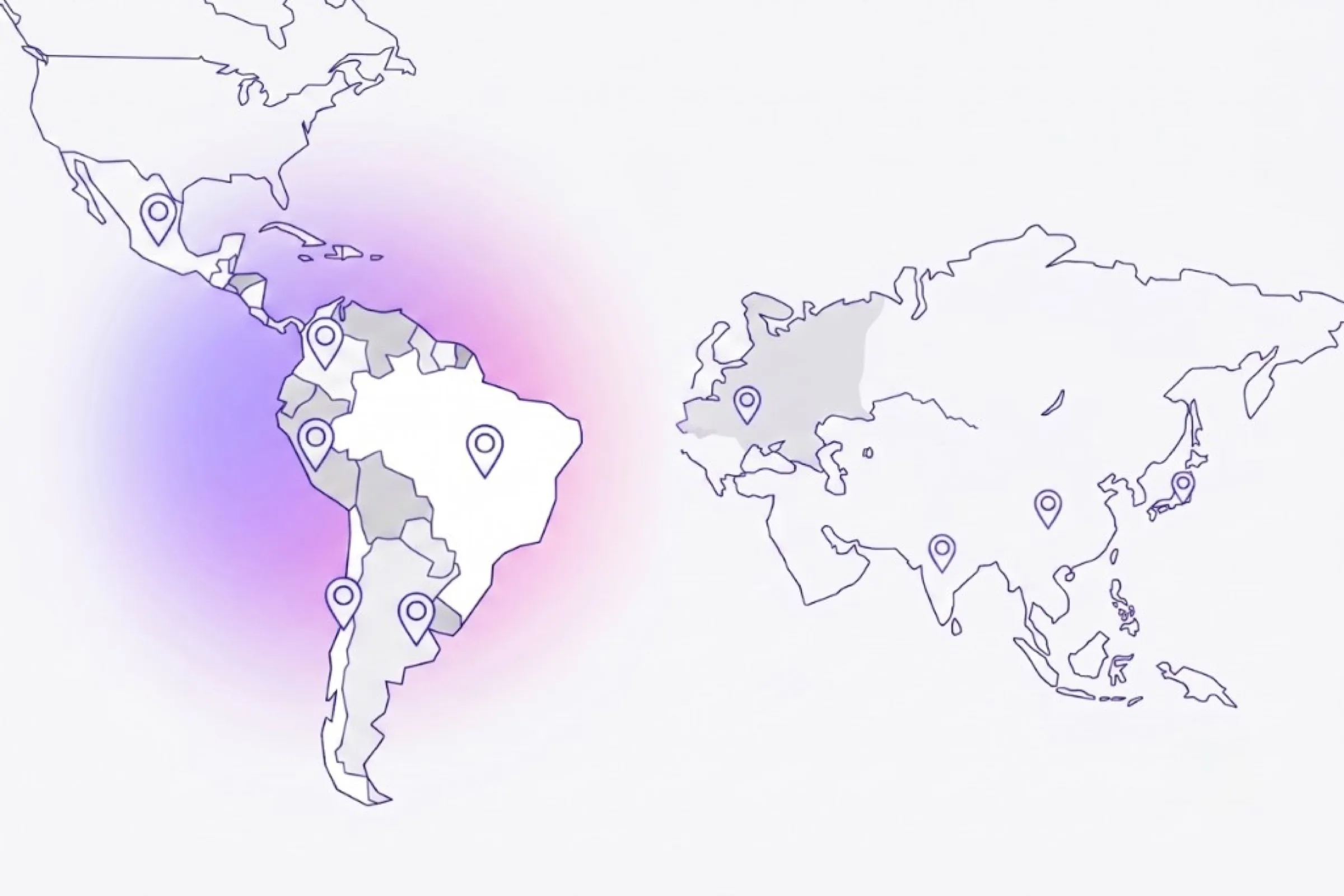
Why LATAM Talent Works Well for Custom Software Projects
Custom software development benefits particularly from nearshore LATAM developers for several reasons:
Time zone alignment enables real-time collaboration. Custom software requires constant communication to refine requirements, make decisions, and coordinate work. LATAM time zones (typically 1-3 hours from US time zones) make synchronous collaboration natural.
Cost efficiency for sustained development. Custom software isn't a one-time project—it requires ongoing development and maintenance. LATAM developers provide 40-60% cost savings compared to US developers while delivering equivalent technical quality.
Strong pool of senior developers. LATAM has deep talent pools of experienced developers (IC4-IC6) with expertise in modern frameworks, cloud infrastructure, and architectural patterns.
Cultural alignment with US business practices. LATAM developers often have experience working with US companies and understand communication styles, project management approaches, and startup culture.
Staffing Your Custom Software Development Project
For growth-stage startups building custom software, the staffing challenge is finding experienced developers who can:
- Drive architectural decisions, not just implement features
- Work autonomously without constant oversight
- Balance speed of delivery with code quality and maintainability
- Communicate effectively with non-technical stakeholders
- Adapt to changing requirements without accumulating technical debt
Traditional staffing approaches create problems:
- Direct hiring: Long timelines, high costs, geographic limitations
- Offshore development agencies: Time zone challenges, communication barriers, lack of ownership
- Freelancer marketplaces: Variable quality, high turnover, integration challenges
- Traditional staff augmentation: Enterprise-focused, limited control over compensation, assigned rather than selected talent
How Remotely Works for Custom Software Teams
Remotely connects growth-stage startups with senior LATAM developers specifically for building and maintaining custom software.
Here's what's different:
Pre-Vetted for Technical Depth
Our network of 7,000+ LATAM developers includes IC4-IC6 engineers with proven experience at product companies. These aren't junior developers or agency contractors—they're senior engineers who've designed systems, made architectural decisions, and owned technical outcomes.
You Control Team Composition
We deliver 4+ curated candidate profiles within 48 hours based on your specific technical requirements. You interview using your standards and select developers who fit your technical stack and culture.
This is mutual selection—candidates choose you as much as you choose them. That alignment matters for custom software projects requiring sustained commitment.
You Control Compensation and Retention
Our cost-plus model means you set salaries, bonuses, benefits, and equity. When a developer becomes critical to your custom software project, you can reward them directly without agency markups limiting your options.
For custom software, retention matters enormously. Turnover means lost domain knowledge, architectural context, and development momentum.
Complete Operational Support
We handle compliance, payroll, equipment procurement, and contractor management. You focus on building software, not managing international employment logistics.
Long-Term Partnership Model
Custom software isn't a project—it's an ongoing commitment. Our model supports long-term team stability rather than incentivizing turnover.
Moving Forward with Custom Software Development
Custom software creates competitive advantages when built well and becomes expensive liabilities when built poorly. The difference comes down to team quality, not technology choices.
For growth-stage startups, this means:
- Prioritize senior developers who can make architectural decisions
- Build for maintainability and evolution, not just initial delivery
- Plan for ongoing development and enhancement from the start
- Choose staffing models that support long-term team stability
- Consider cost-efficient talent markets that don't compromise quality
Ready to build custom software with a team of experienced LATAM developers? Hire developers with Remotely and access senior talent who can turn your custom software vision into sustainable, scalable reality.