.svg)
.svg)


Last updated: February 2026
High-performing engineering teams now span borders, but choosing the best remote job platform for nearshore development talent isn’t one-size-fits-all. The right marketplace should combine senior engineers in aligned time zones, rigorous technical vetting, and hands-on operational support. Nearshore development typically means partnering with teams in nearby countries—like across Latin America—for real-time collaboration and cultural fit. This guide gives CTOs a decision-ready framework to evaluate nearshore hiring platforms, compare engagement models, run a low-risk pilot, and scale with governance. Throughout, we highlight how Remotely blends data-driven vetting with payroll, compliance, and onboarding to help U.S. startups scale predictably.
Why Choose Nearshore Talent Marketplaces for Development Teams
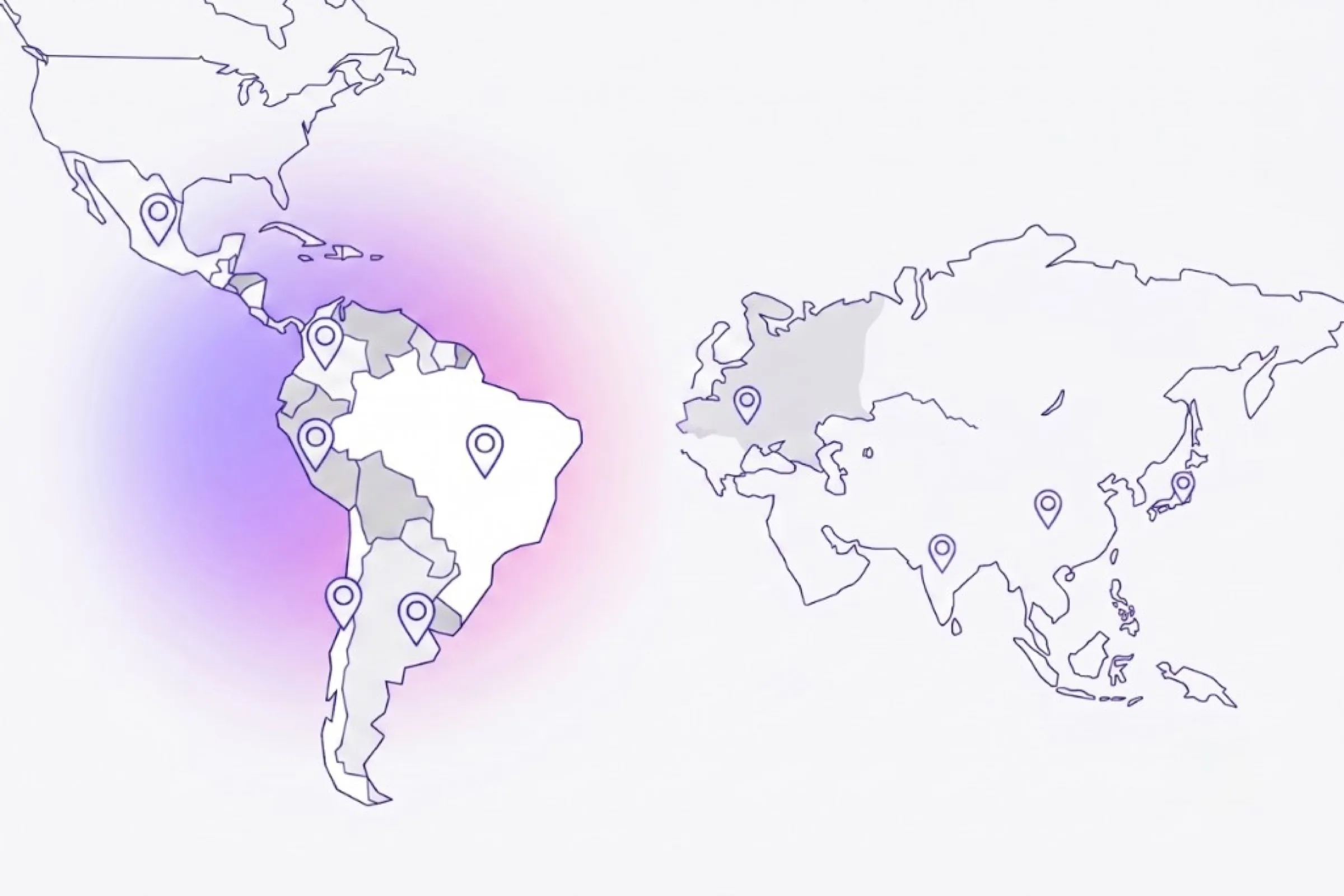
Nearshore development is outsourcing software work to teams in countries geographically close to the U.S., enabling time zone overlap and smoother cultural alignment. In practice, that often means Latin America, where product and engineering norms map well to U.S. agile practices, and collaboration happens during shared business hours.
Related terms commonly used by platforms include nearshore hiring (sourcing and engaging talent in nearby regions), nearshore outsourcing (delegating projects or roles to providers in adjacent countries), and nearshore software development (building products with those teams).
Marketplaces are important because they fuse flexible access to vetted developers with cost discipline, allowing startups to staff quickly without building a full in-house recruiting and operations function. Compared to offshore or U.S.-only models, nearshore options strike a balance: real-time agile delivery without overnight delays, stronger cultural compatibility, and lower risk than purely offshore arrangements. For a survey of options, see Remotely’s overview of the top job boards for nearshore hiring.
Key Benefits of Nearshore Hiring for CTOs
Time-zone overlap and cultural proximity translate to tighter feedback loops, faster decisions, and higher sprint velocity—core advantages cited across nearshore best-practice guides such as Axented’s analysis of agile collaboration benefits. When teams work while you work, standups, code reviews, and incident response remain synchronous rather than delayed.
Key comparison points:
- Cost: Nearshoring typically reduces total labor costs versus U.S.-only hiring while avoiding the coordination overhead often seen offshore.
- Cultural alignment: Shared working norms and strong English proficiency improve requirements clarity and stakeholder management.
- Talent access: Nearshoring expands the senior engineering pool without sacrificing collaboration quality. Guides note this dual impact—bigger talent pool, predictable savings—when nearshoring is executed well.
A quick view of your options:
Nearshoring can unlock senior specialists quickly and keep spending more predictable through fixed-rate or transparent hourly models, an approach echoed in nearshoring primers like ScaleArmy’s guide.
Critical Criteria for Evaluating Nearshore Talent Marketplaces
Treat marketplace selection like a rigorous checklist. Look beyond resumes and rate cards to how a platform delivers end-to-end: matching accuracy, engagement flexibility, payroll and compliance coverage, cultural enablement and onboarding, and tooling/integration fit. CTOs should prioritize partners that provide measurable talent quality, transparent operations, and support for ongoing performance management across the full lifecycle.
Matching Accuracy and Talent Intelligence
Talent intelligence combines internal HR data, external labor market signals, and predictive analytics to identify, rank, and validate candidates against role requirements. It helps teams see beyond titles, quantifying skills, experience, and growth potential while revealing patterns that improve hiring outcomes.
Leading marketplaces leverage AI and big data to match candidates to your tech stack and delivery context, raising shortlist quality and reducing bias through evidence-based evaluation (see Metaview’s overview of talent intelligence platforms). Must-have features include:
- Skills-based AI matching tied to your stack and seniority needs
- Transparent candidate profiles with technical evidence and interview insights
- Documented, evidence-led bias reduction processes in selection
Remotely’s Gitsight exemplifies this approach, analyzing real code and open-source activity to surface proven contributors and quantify engineering signals that matter for startup-scale delivery. Further, Remotely uses a combination of AI and human intelligence. AI scores candidates on their suitability for the role and transparently provides good fit / bad fit reasons for each candidate that you can use as an input into interviews and hiring decisions.
Engagement Model Flexibility
An engagement model defines how you collaborate—staff augmentation, dedicated teams, or managed services—each with trade-offs on ownership, flexibility, and delivery accountability (as outlined by Softtek’s guide to nearshore engagement models).
- Staff augmentation: fastest way to flex headcount up or down; you own delivery.
- Dedicated teams: deeper continuity and product context; shared ownership.
- Managed services: provider runs delivery against SLAs; less day-to-day load but higher commitment and less control.
Top nearshore providers enable you to start lean and scale as priorities shift—keeping options open while you validate fit and outcomes, a flexibility emphasized in nearshore best-practice guides like Axented’s.
Payroll, Compliance, and Operational Support
In cross-border hiring, compliance means adhering to local labor laws, tax rules, and contract requirements to mitigate legal and financial risk. Best-in-class marketplaces offer end-to-end operational coverage so engineering leaders can stay focused on delivery rather than entity setup and administration. As summarized in global marketplace overviews, expect:
- Localized employment and benefits automation
- Global payroll with compliant, on-time payments
- Standardized legal contracts and document management
Remotely combines this operational layer with transparent billing and predictable pricing, removing hidden fees and administrative friction.
Communication, Culture, and Onboarding Enablement
Cultural enablement is the practice of equipping distributed teams with the tools, norms, and training to bridge language, collaboration, and work-style differences. Nearshore teams ramp faster when onboarding is structured and includes cross-cultural readiness and language support—an approach highlighted in TECLA’s guidance for CTOs.
Best practices to operationalize:
- Daily standups, weekly check-ins, and defined escalation paths
- Documented onboarding flows with artifacts (architecture, runbooks, coding standards)
- Modern communication stack (Slack/Teams/Zoom) and shared rituals for transparency
Sample onboarding checklist:
- Access: repos, CI/CD, cloud accounts, issue tracker, documentation hub
- Environment: dev containers, sample data, secrets handling
- Ways of working: sprint cadence, Definition of Ready/Done, code review policy
- Communication: channels, standup time, demo schedule, on-call rotation
- Quality gates: test coverage targets, branching strategy, release checklist
- Security/compliance: data handling, PII protocols, device policies
Tooling and Integration Compatibility
Integration compatibility is a marketplace’s ability to connect seamlessly with your collaboration stack—Slack, Microsoft Teams, Zoom, Jira, CI/CD pipelines—and automate workflows and reporting. Typical integrations and orchestration tools include Slack, Teams, Zoom, Zapier, n8n, and project management platforms, as tool roundups for nearshoring note. This connectivity improves visibility, reduces manual overhead, and strengthens auditability across hiring and delivery.
Step-by-Step Checklist for Selecting the Right Marketplace
Treat selection like a pipeline: clarify objectives, shortlist candidates, validate technical rigor, run a time-boxed pilot, measure outcomes, then scale with governance. At each stage, capture both qualitative (team chemistry, stakeholder satisfaction) and quantitative signals (time-to-hire, cycle time, cost-to-value).
Define Objectives, Skill Requirements, and Success Metrics
- Scope and timeline: feature set, milestones, dependencies
- Tech stack and seniority: languages, frameworks, CI/CD, cloud; English level
- KPIs: time-to-hire, ramp time to first PR merged, defect escape rate, cost targets, sprint throughput
Mapping needs to business outcomes and measurable KPIs upfront increases alignment and reduces churn, a practice underscored in nearshore planning guides like Arnia’s.
Shortlist Marketplaces Based on Capabilities and Presence
- Matching tech and talent intelligence depth (signals, transparency)
- Compliance track record, local presence, and support responsiveness
- Suitability of engagement models
Create a comparison matrix capturing these criteria and your must-haves for side-by-side clarity.
Evaluate Technical Validation and Vetting Processes
- Require transparent vetting: live coding, code review, system design, and references
- Ask for proof: code samples, recorded interviews, and scoring rubrics—not just resumes
- Example flow: async skills screen → live code exercise → architecture interview → soft skills and English assessment → references
Marketplace overviews highlight that rigorous, visible vetting correlates with faster onboarding and fewer mis-hires when compared to resume-only screens.
Remotely provides the tools for you to evaluate candidate profiles asynchronously (including a video of the candidate, technical evidence, and a summary of the reasons they're a good fit for the role, (as well as identifying risk areas), as well as the control to define the interview process that helps you best evaluate candidates for a role. Remotely saves you time and mitigates risk by having ID verification, reference checks, and background checks embedded into its workflows.
Pilot with a Small Team to Assess Fit and Delivery
- Structure: 4–12 weeks, deliverable-based; define acceptance criteria and demo cadence
- Monitor: development velocity, review quality, communication responsiveness, and product thinking
- Capture lessons: refine onboarding docs, adjust rituals, calibrate expectations
Customer stories frequently point to short, structured pilots as the lowest-risk way to validate performance and collaboration dynamics before scaling.
Measure Outcomes and Refine Hiring Strategies
- Delivery metrics: on-time milestone rate, cycle time, escaped defects, PR review latency
- Team feedback: developer and stakeholder satisfaction, collaboration friction points
- Cost-benefit: compare actuals against targets; adjust ramp plan, onboarding, or marketplace mix
Use these insights to tighten role definitions, update scorecards, and sharpen marketplace asks.
Scale with Governance and Managed Services
Governance is the system of roles, rules, and accountability that ensures distributed teams deliver predictably—covering decision rights, escalation paths, metrics, and review cadences. As you scale:
- Define SLAs/SLOs and quality thresholds
- Establish RACI for product, architecture, and delivery
- Set quarterly business reviews and monthly operational check-ins
- Align security reviews, access audits, and incident postmortems
If moving to managed services, weigh a higher upfront commitment against reduced day-to-day orchestration and ensure exit clauses and knowledge transfer plans are clear.
Final Considerations for Successful Nearshore Partnerships
The strongest outcomes come when rigorous talent intelligence, intentional onboarding, and clear governance work in concert. Prioritize marketplaces that combine deep regional expertise with compliance, payroll, and onboarding capabilities to shorten ramp and reduce risk. Remotely’s consultative approach, Gitsight-driven vetting, and predictable pricing model are designed to help U.S. startups assemble senior nearshore software development teams with confidence—and keep them performing at scale.
Frequently Asked Questions
What are the main advantages of nearshore development teams over offshore or local hires?
Nearshore teams offer strong time zone overlap, lower costs than local hiring, and better cultural alignment than many offshore options—enabling faster collaboration and smoother integration with U.S. tech teams.
How can CTOs ensure effective communication and cultural alignment with nearshore teams?
Run daily standups, use structured onboarding, and invest in cross-cultural training so expectations, feedback, and collaboration norms are explicit and shared.
What engagement models do nearshore marketplaces typically offer for startups?
Most offer staff augmentation, dedicated teams, and managed services, letting startups choose the scope, ownership, and scale that fit each project.
How important is technical vetting and talent intelligence in selecting a marketplace?
It’s essential—transparent, data-driven vetting ensures only qualified candidates advance, raising delivery quality and reducing mis-hire risk.
What operational services should CTOs expect to be handled by nearshore talent partners?
Expect payroll, compliance, local contracts, onboarding support, and clear billing to minimize overhead and legal exposure while you focus on delivery.