.svg)
.svg)



The world is running short on doctors. AmplifyMD's virtual care platform makes the ones we have go further, and built the engineering team behind it by partnering with Remotely to scale cost-efficiently.
MVP to Series B: AmplifyMD grew its engineering team from a single Remotely hire in 2021 to 23 today, the international core that carried the platform from first build through Series B.
About AmplifyMD
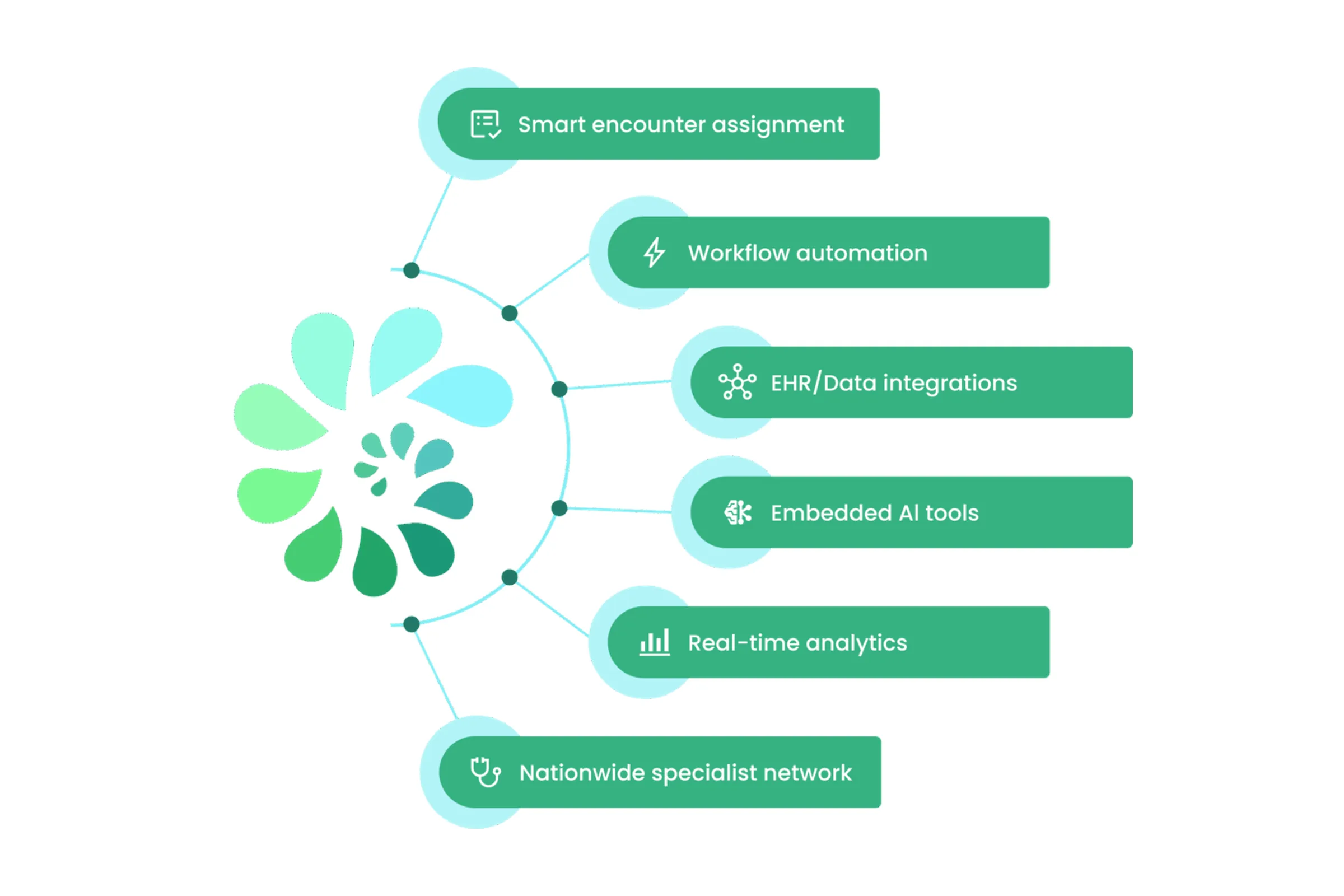
AmplifyMD is the only fully EMR-integrated virtual care platform, paired with an affiliated medical group, delivering full 50-state coverage across 15+ clinical specialties. The platform embeds directly into hospital workflows, extending specialist access, and makes remote providers up to 2x more efficient through EHR-integrated, AI-enhanced workflows.
That platform is backed by investors who have stayed with the company across successive rounds. AmplifyMD has raised seed, Series A, and Series B financing, with Forerunner Ventures leading its Series B and emerging as one of the company's highest-conviction backers. Greylock has supported AmplifyMD since its early days, and it was Greylock, as an early investor, that introduced the company to Remotely and pointed to strong results at other portfolio companies. F-Prime Capital and Tau Ventures round out the venture syndicate, and Memorial Hermann Health System, one of the largest nonprofit health systems in the US, joined the Series B as a strategic partner, a signal that AmplifyMD is trusted not only by financial backers but by the health systems actually deploying it.
That institutional confidence is reinforced by independent recognition. AmplifyMD was named MedTech Breakthrough's "Best Overall Telemedicine Platform" in both the 9th (2025) and 10th (2026) annual programs, a two-time consecutive winner, following an earlier "Virtual Care Innovation Award." KLAS Research named AmplifyMD to its 2025 Top 20 Emerging Solutions list and awarded it an A+ in its Emerging Company Spotlight, citing strengths including improved outcomes and improved clinician experience.
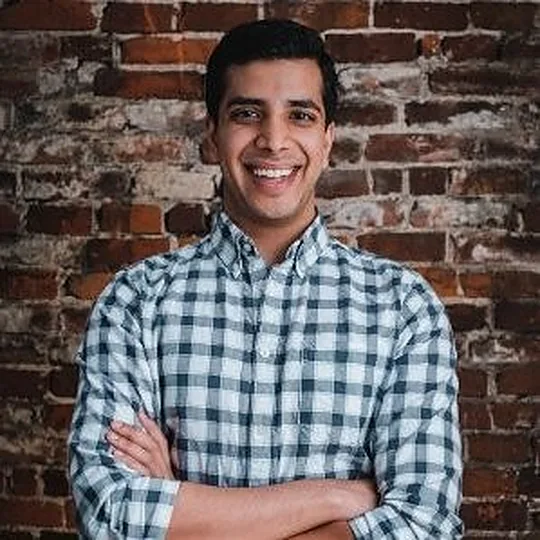
Leading the build is CEO and co-founder Meena Mallipeddi, a Stanford computer science and international relations graduate and former Bain consultant who set out to solve the physician shortage. CTO Nijay Patel joined in 2021 to lead the engineering organization at the center of this story. Since December 2021, that team has grown to 23 active engineers, built through 32 hires, one at a time, over four and a half years with Remotely.
The challenge
AmplifyMD started before COVID with a simple premise: there aren't enough doctors, so make the ones we have far more efficient.
"We knew that with the bathtub draining faster than it's filling, we had to find ways to make providers more efficient. That's where the platform comes in, and that's where our engineering team comes in. We built in a ton of AI automations and workflow improvements so that the providers delivering clinical care can work faster and see more patients in the same amount of time." — Meena Mallipeddi, CEO & co-founder at AmplifyMD
Delivering on that meant scaling an engineering team in a domain where talent is genuinely hard to find. As a core team of three, AmplifyMD had to move fast, and traditional US recruiting could not surface healthcare-experienced candidates at the pace or economics the company needed. With little prior experience in distributed hiring, the choice of partner became critical.
"Finding individuals who have experience working within healthcare or healthcare technology is really challenging. It's a smaller talent pool and there are a lot of startups and organizations competing for that talent." — Nijay Patel, CTO at AmplifyMD
The stakes raised the bar further. AmplifyMD handles large volumes of protected health information and is subject to HIPAA, so any hiring model had to hold up to serious security scrutiny.
"There is a lot that could go really wrong for a lot of people if there's a data breach or a security incident. Data, security, and privacy are paramount to us. We're SOC 2 Type II certified, consistently, we're HIPAA compliant, and we're going to be FedRAMP certified this year. Security is a big deal for us, and we would not do anything to jeopardize that." — Meena Mallipeddi
AmplifyMD had also tried hiring in India. The quality was excellent, but the distance created a problem it could not design around.
"I'm Indian, we have a lot of connections there, and they did a great job, but the time zone was really killing it."— Meena Mallipeddi
The solution
An early investor, Greylock, introduced AmplifyMD to Remotely and pointed to strong results at other portfolio companies. After vetting the operation, Meena saw a partner rather than a vendor, and the first hire landed in December 2021.
"It was very clear it was a high-quality outfit, and that we'd find a partner that understood where we were coming from but could also grow and scale with us as we got bigger. Operations at Remotely have been really helpful, the way the pipeline is built and the way you continue to help us scale with different types of engineers. We have full-stack engineers, DevOps, and others we've recruited through you pretty much all throughout South America." — Meena Mallipeddi
The difference was philosophical as much as practical. Rather than contracting task-oriented developers to execute detailed specs, AmplifyMD sourced engineers who could join the mission. In practice that meant engineers who listened in on sales calls, understood customer problems, and came forward with solutions of their own.
"The big advantage of having individuals who are really integrated into the organization and approaching their work as being part of the company and in alignment with the mission is that you can start to have a more bottom-up structure for innovation." — Nijay Patel
A geographic focus on Brazil and the rest of Latin America solved the time-zone problem India could not. Today 81% of the hires are based in Brazil and the remainder across Latin America, close enough to overlap with the US day and stay physically connected.
"The big differentiator was partly that we could visit physically. Nijay goes there roughly twice a year, we have all-company off-sites, and sometimes the team comes here for key strategic meetings or client launches. But it's also being able to overlap regularly with the US team without completely messing up their schedule. You guys make it really easy to do business internationally." — Meena Mallipeddi
Crucially, the same bar applied to every engineer, no matter where they were based.
"We vet them exactly the same way as if they're an engineer from Stanford located in the Bay Area. They're doing the case studies, the coding exercises, the personality-fit interviews. We're checking they can hack it in a startup, handle ambiguity and fast-paced movement, and that they can handle our two-week sprints consistently and with high quality." — Meena Mallipeddi
Because scaling was built into the partnership, adding people when the company needed them was fast. The clearest example is recent: between January and May 2026, AmplifyMD filled a six-engineer cohort, its largest single expansion so far.
"When we do need to scale up and identify additional folks to join our team, we can move really fast. Candidates have been pretty thoroughly vetted, not just generally as developers, but specifically for our organization and culture." — Nijay Patel
The engineers in practice
The distributed team, concentrated in Brazil, has been central to AmplifyMD's growth. From founding through Series B, this team built and evolved the product platform, and it has proven durable: the active team averages roughly 2.3 years of tenure, with 14 of 23 engineers past their two-year mark and 8 past three. On quality, Meena draws no distinction by location.
"Quality-wise, they're on par. They're fantastic. Just because they're from location A versus location B, it's not different. A true engineer creates a product that people can understand solely from their notes. It has to be efficient code, with clear documentation, and we found that with Remotely just as much as we have in the US." — Meena Mallipeddi
Over time, individual engineers became leaders. Several who joined when the company had fewer than 10 people progressed into leadership within product and engineering, and they understand the company's evolution, market approach, and go-to-market strategy well enough to hold the executive team accountable on direction.
"It's been amazing to see the pull from a number of those individuals to help us refine our strategy and our narrative, holding us accountable as leaders to having a clear direction and vision, and being collaborative in that process, bringing ideas forward." — Nijay Patel
That is genuine ownership, the opposite of a transactional consulting relationship, and it shows up in retention: across four and a half years, roughly 72% of everyone AmplifyMD has ever hired through Remotely is still on the team.
Cultural integration at scale
AmplifyMD worried there would be friction working with a largely Brazilian and Latin American team. Instead, the engineers integrated seamlessly, and the company was intentional about keeping it that way, using tools like Donut for random peer connections and hosting on-site retreats in São Paulo. Everyone is treated as a full member of the organization, not as staff augmentation kept at arm's length. The concentration in Brazil created a practical flywheel too: experienced engineers referred colleagues, which accelerated hiring and reduced onboarding friction. It reflects a deliberate choice about how AmplifyMD wanted to build.
"We really wanted a team that would work with us as part of our team, not a third-party contractor. Our goal was always to have an engineering team that was Amplify, not 'this is Amplify and this is our contracted engineering team.'" — Meena Mallipeddi
What makes Remotely different
AmplifyMD stayed remote by design, because the model lets it hire the best person for the role regardless of location. The company is now roughly 60 people, about half US-based and half international.
"We started remote, we stayed remote, and we're going to keep staying remote. We find it really valuable to hire the best talent regardless of location. As a cash-efficient business, we needed top-quality talent, a partner that can help vet it, people close to our time zone, and very high-quality English so they can communicate internally and with clients. The big benefit for me: a whole lot cheaper." — Meena Mallipeddi
The regulatory concern that worried health systems early on turned out to be manageable through whitelisting specific countries, explaining use cases, and educating customers, many of whom work with nearshore engineering teams themselves.
"It certainly has become much, much easier. There isn't an organization to date that we're working with that flat out prohibits that." — Nijay Patel
For Meena, the simplest way to describe the partnership is operational.
"How would I explain Remotely to someone looking at it? I'd say it's your HR partner for all your international hires." — Meena Mallipeddi
Key learnings
Hiring this way forced AmplifyMD to rethink how it evaluates talent. Instead of chasing whoever was available or defaulting to a US-first search, the company started from a simpler question: where is the best person for this role, and will they fit the way we work?
"We don't necessarily perceive it as US-based versus South America. Instead it's, where is the talent? Is there a good cultural fit? Is this someone we want to work with every day? Can they seamlessly communicate and engage with our customers?" — Meena Mallipeddi
Talent first, geography second proved more powerful than location-based hiring. AmplifyMD also learned that a remote-first model rewards a specific kind of hire: experienced engineers who communicate clearly and work well asynchronously matter more than proximity or hands-on onboarding. So the company deliberately brought on senior people who could adapt to its processes quickly rather than needing close supervision, which is a large part of why the team ramped fast and stayed productive.
Looking ahead
With its Series B secured in 2025, AmplifyMD is investing in exactly the direction its Remotely team has been moving: AI and LLM capabilities, deeper EHR integration, and the specialized healthcare engineering that turns a virtual care platform into a clinical operating system. The hiring focus is evolving with it, from generalist full-stack developers toward domain-specific and AI-native expertise, and Remotely is building that next chapter the same way it built the first, one carefully vetted hire at a time.
The six-engineer cohort added in early 2026 is the most recent proof that the model still moves fast the moment the startup needs it to. Four and a half years in, this no longer looks like a hiring relationship. It looks like a bench AmplifyMD can draw on whenever the mission demands more, and the 23 engineers already in the trenches are the ones who will build what comes next.
Here's a model where we can identify folks and bring them onto our team, not as contractors focused on specific projects, but to be part of our mission and journey together in growth, partnership, and engagement." — Nijay Patel
Key results
2.3 years average tenure on the active team, with more than half past two years and the first engineers hired in 2021 still building today, nearly five years on.
From 3 to 20+ engineers built through Remotely: several joined AmplifyMD when it had fewer than ten people and have since grown into engineering and product leadership.
2x the throughput: the platform this team helped build doubled TeleHospitalist consults per shift, cut TeleStroke operational costs by 52%, and turned outpatient specialty waits from months into days.