.svg)
.svg)


How do you build an engineering team that grows in spurts, with no upfront contract and no HR overhead?
2x the engineering team hired through Remotely in six months, from eight engineers to 15, built into two full squads with a lead promoted from within, all without a heavy upfront contract or added HR overhead.
About Sharp Performance
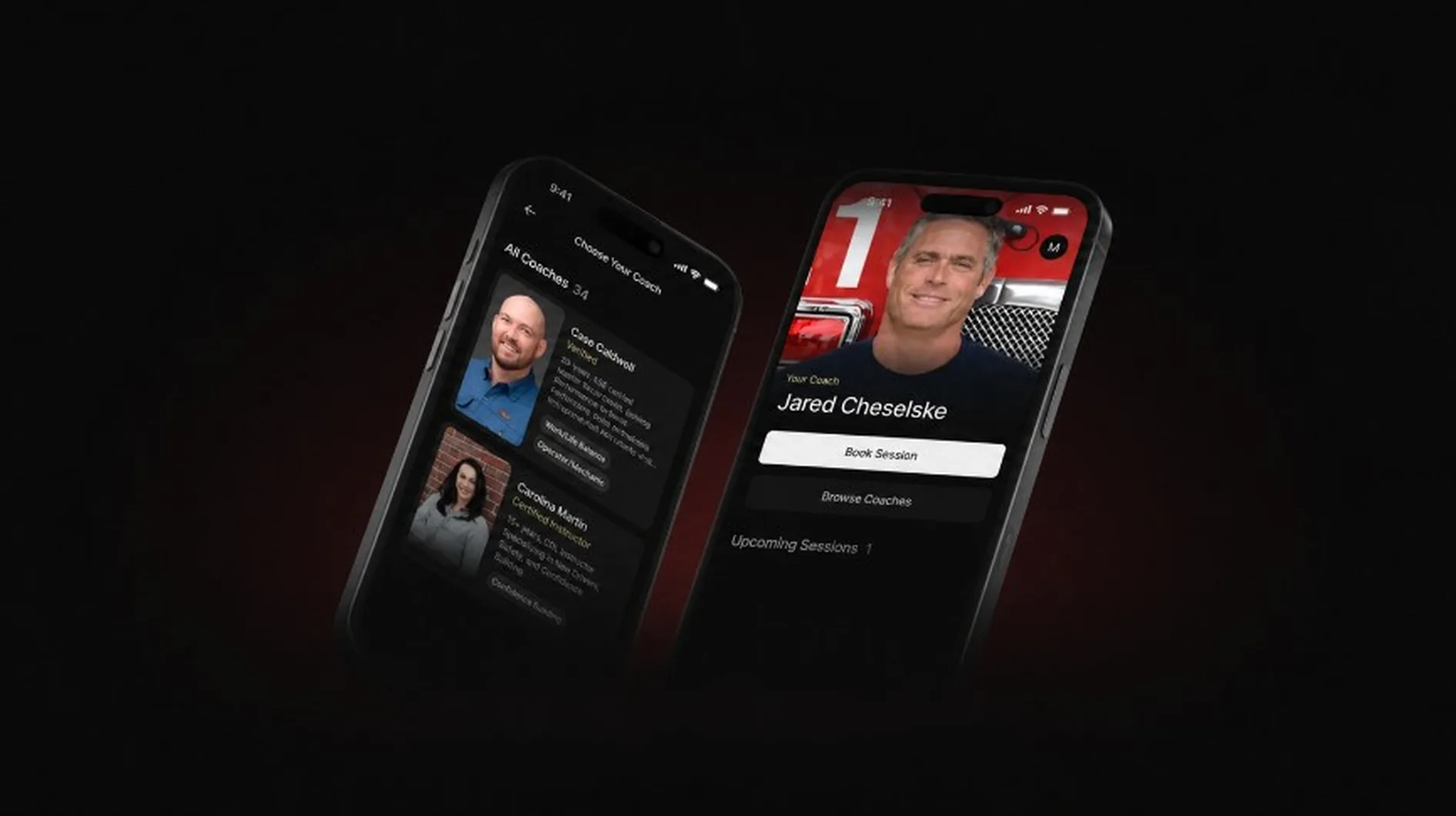
Sharp Performance is a coaching and performance platform for first responders, serving police and fire personnel in high-stress, high-intensity occupations. Backed by a16z, Commonweal Ventures, and SV Angel, the company is building technology to support performance, readiness, and resilience in public safety.
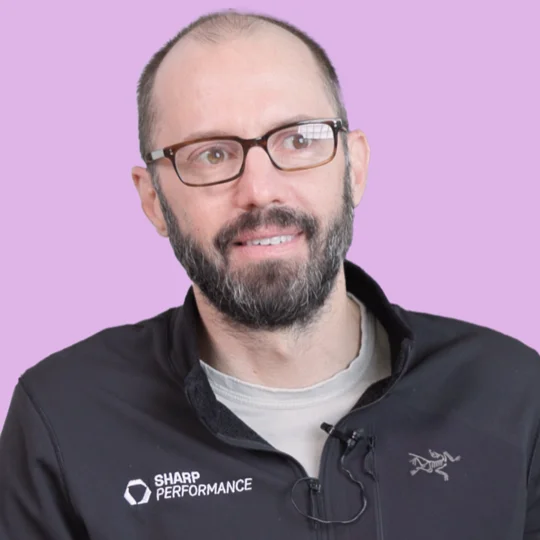
Real Deprez, Head of Engineering, has more than 20 years in tech and leads the engineering team in close partnership with product. The product spans a back-end stack, a front-end stack, and a mobile application, so the team hires across the board. Sharp Performance has built its engineering organization through Remotely.
The Challenge
As a startup, Sharp Performance grows in fits and spurts, and the engineering challenge is matching hiring to those bursts across a broad technical surface area.
"The challenge for us is how we grow the teams in periods of growth, how we distribute the teams, what kind of folks we're looking for, what backgrounds and tech competencies based on a broad offering. And as you're growing, the challenge is developing leaders and getting people into leadership roles." — Real Deprez, Head of Engineering at Sharp Performance
Real had built distributed teams before so he arrived with a clear-eyed view of what can go wrong.
"I've worked with multiple teams offshore, Ukraine-based, Latin American-based, Indian. So I've had some experience, some good and some bad. But when I joined Sharp, I was pleasantly surprised with the quality of the team we had hired through Remotely." — Real Deprez
The Solution
The hiring process mirrors the one Sharp Performance uses for local hires, and it took only light tweaking to fit.
"The process for hiring is very similar to the one we'd use hiring local folks. I want it to be a rewarding experience and to get the right people in, understanding their technical skills but also culture fit. It was a little bit of tweaking, but it's very well laid out and easy to adjust. It's easy to tell you what we want, get sourced really quickly, and then give constant feedback." — Real Deprez
Remotely handles communication and logistics, which matters for a lean team without HR overhead.
"There's always someone on Slack I can reach out to if I need to tweak a JD or a hiring process, or say we need two of this role versus one. Candidates have a good experience and we get good quality feedback. Scheduling is all done by you folks, which is amazing. It doesn't require a large HR team or my time to wrangle schedules." — Real Deprez
The biggest advantage was the ability to scale on demand, without the heavy upfront commitment other providers require.
"You can come in and if you need one or two engineers, as we've proved, you can scale that up to 15, 16, hopefully more. Some companies require you to sign a big contract up front and commit to a certain number of engineers, and you only get access to the pool if you're willing to spend a lot of money. In terms of scaling, that's been a real unlock. When we need more, it's really easy to reach out, create more JDs and pipelines, and get more folks in the door." — Real Deprez
The Engineers in Practice
For Real, communication is paramount, and the developers cleared that bar. Nearshore Latin America also gave the team the time-zone overlap that makes distributed work feel local.
"We've gotten great developers in the door that have no communication problems. Latin America on nearshore is fantastic because we have a good time overlap. They start a little earlier and end a little earlier, so there's a really good crossover time in the middle where we can schedule our standups and ceremonies. Functionally, it doesn't feel any different than working with a local remote team." — Real Deprez
He runs the team as one group, with no distinction by location.
"All engineers are on the same level. It doesn't matter if they're in the next cube, the next office, or 100 miles away. They're all part of the team, we send them swag, we talk to them often, we're always on Slack. Communication is key there, and that's been fantastic." — Real Deprez
Scaling into Leadership
Scaling was not only about adding individual contributors. As one squad grew too large, Sharp Performance split it along the lines of its stack and product direction, and promoted from within the Remotely team.
"We identified an individual who already had leadership capabilities and promoted him into that role, and he's been excelling. Now we have two squads, both led by Remotely engineers and both staffed by Remotely engineers. It just makes my life easier when we have the right folks in the right chairs." — Real Deprez
Ready for What's Next
AI has reshaped how the team works, and the team absorbed the shift quickly.
"AI has been a huge benefit but also a disruptor to the way every team works, and the team has adopted it really well. We've got a plan around it, we've got the agents, the tokens burning. The team's shift in the last six months into agentic coding using a lot of the new technologies has been really wonderful. We have a resilient team of skilled professionals that can adapt, and we're ready for the future." — Real Deprez
Looking Ahead
Sharp Performance moved from one or two engineers to two full squads in Real's first six months, and the plan is to keep growing on the same model. With leadership now coming from inside the team, an AI-ready engineering culture, and a hiring process that scales up whenever the business needs it, the company can grow on its own terms instead of being held back by its own growth.
Key results
2 full-stack squads, covering platform, web, and mobile, both led and staffed by Remotely engineers, including a lead promoted from within.
0 added HR overhead: with scheduling and coordination handled by Remotely, the team shifted into agentic AI coding along the way.
Scaled from 1 to 15 engineers on demand, with no heavy upfront contract.