.svg)
.svg)




Vantora (formerly UP.Labs) does not hire engineers to execute roadmaps someone else has already defined. It builds companies around complex operational problems inside enterprises such as Porsche and Alaska Airlines, where teams must turn ambiguity into a working business. That makes every technical hire a zero-to-one hire—and increasingly, an AI-native one.
Since October 2024, Vantora and its ventures have hired 92 software engineers through Remotely, including 15 for AI, ML, and agentic roles. Every search Vantora completed with Remotely ended in a hire. More important than the volume was the kind of team Vantora built: engineers its leaders describe as entrepreneurial, deeply embedded, and able to use AI to move faster.
About UpLabs
Vantora is a venture studio that partners with major corporations to build new startups around high-stakes operational challenges. Rather than relying onthrough internal innovation programs alone, the studio turns them into venture opportunities and brings new companies to market
The result is a technically demanding environment shaped by enterprise infrastructure, emerging technology, and zero-to-one execution.
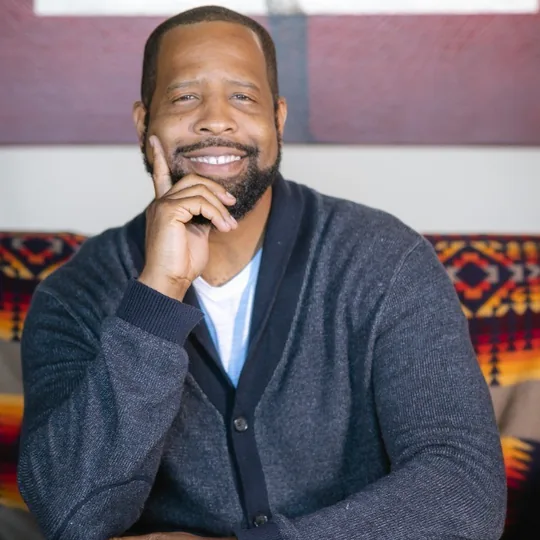
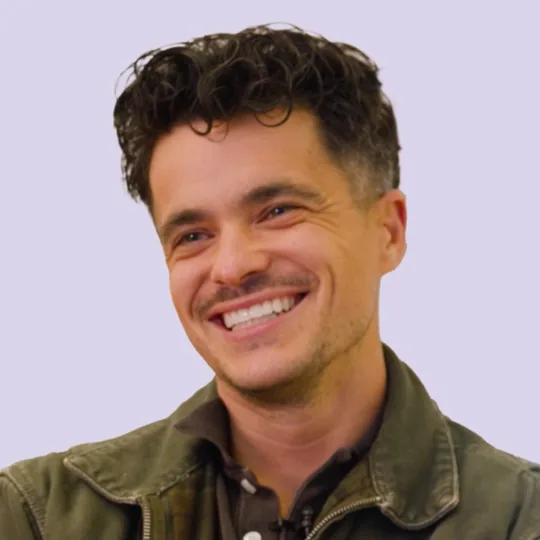
Leaders across studio, product, and data include Rob Patrick, CTO and Head of AI Studio; Tyler Watson, Venture Head of Product; and Kieran Smith, Venture Head of Data. All three rely on Remotely to hire people who are AI-native and comfortable working on frontier technologies inside complex enterprise environments.
Why Vantora partnered with Remotely
For Rob, a lifelong software builder and a former software services founder, the decision started with values rather than rates.
"Remotely's values are very much aligned with ours, and that was a big reason why we chose to partner with them. The values that Remotely has internally for everybody we've worked with also go through to everybody they hire. The engineers, the data scientists, everybody we work with has the same startup mindset and gets excited about the same things we get excited about. Having that value alignment was a big reason why we partnered with Remotely, and I think why it's been successful to date." — Rob Patrick, CTO and Head of AI Studio at Vantora
Because Vantora runs an unusual business model, the partnership had to be built rather than bought off the shelf.
"When we started this whole thing with Remotely, we just got on the whiteboard and said, 'How do we do this together?' I said, 'Here are the things we want to do. How do you guys work?' We really worked as a true partnership to bring all those ideas together, and we met each other in the middle." — Rob Patrick
The challenge
Vantora hires against a bar that has shifted fast. The rules for interviewing and the skills the studio looks for have changed. The priority is AI-native talent that can solve complex problems and default to action.
"We heavily value people that take initiative. We want that startup mentality. We have a lot of autonomy here, so we want people who are going to make their own decisions and charge forward and default to action. We get to choose what technology we use, so we're always picking frontier technologies, and we oftentimes get to be the first one to use something out of the gate." — Rob Patrick
That bar collides with a hard market reality: AI talent is scarce, difficult to recruit, and difficult to retain. For Tyler, who has built technology in enterprise settings for 14 years, the deeper risk with remote teams was never raw skill. It was disconnection.
"Some of the challenges with remote teams is this feeling of disconnection, where maybe you're working with a team of engineers in Eastern Europe through one project manager. You're writing long requirements documents, but there's not really a day-to-day interface, and you're not even sure if these people really understand the business you're building."— Tyler Watson, Venture Head of Product at Vantora
Kieran, with roughly 20 years in the field, had seen a related pattern: remote teams with real technical skills but a narrow mindset that stalled the moment a problem stopped being a straight line.
"Some issues I've had in the past working with remote teams from other parts of the world is they can have the technical skills, but their mindset is very limited in how to use those skills. If it's not just a straightforward one, two, three, they may struggle on how to get to the next step."— Kieran Smith, Venture Head of Data at Vantora
How the match became more precise
Vantora has continued to fill some of its most difficult positions through Remotely, including AI agentic and ML engineering roles. For Rob, effective technical recruiting starts with culture.
"The quality of engineers we've gotten from Remotely has been really great. Technical recruiting is so difficult. For me it starts with culture matching, and that's something Remotely has done very well from the beginning. They've been able to consistently bring great people to the table, and we've been pretty effective in filling our open roles for some of the most difficult positions, like AI agentic engineers and ML engineers." — Rob Patrick
The match got sharper through collaboration. The data team worked with Remotely to define the intersection of skills each venture needed, building shared frameworks to guide the search.
"We collaborated really well with the Remotely team. We were looking for this intersection of skills, so we developed frameworks like a capability matrix that shows we need more of this skill, less of that skill in a particular profile. They were really able to hone in on the talent we needed and produce great results. It's been a testament to the partnership. Successful collaboration would be the one word I'd use." — Kieran Smith
Just as important, people already on the team proved adaptable enough to grow into AI-native work as the bar moved.
"AI talent is a scarce commodity, very hard to recruit and retain. But we were happy to find that a lot of the people we'd already hired had the core principles and understanding that we could upskill them into AI-native work, and they were very excited to do it. A lot of them started doing it without me even asking. That's the kind of mentality we want." — Rob Patrick
Engineers who work like founders
Once the teams were in place, the difference showed up in how they worked. Tyler's engineers, primarily from Mexico and Brazil, work with the newest AI tools and use them to move at a pace he had not experienced with previous teams.
"The number one thing on my list with engineers is whether they're staying at the cutting edge of AI and deploying it in their day-to-day work. The team I work with through Remotely is right there. Compared to engineering experiences I've had in the past, they are 10x more efficient and more effective at pull requests, getting stuff done, and problem-solving using AI. They even push our domestic team by using AI to its fullest extent." — Tyler Watson
The disconnection he feared with remote teams never materialized. The relationship reads as close, not distant.
"Our team members are with us every step of the journey. I have a direct relationship with them daily. I know about their families, they know about mine. These are people I would be friends with. It's essentially equivalent to working with a really high-powered engineer in person domestically. It's the same vibe, and the team I'm working with now is one of my favorite teams I've ever worked with." — Tyler Watson
What ties it together, across all three leaders, is ownership. The engineers behave like founders.
"These guys approach building technology like entrepreneurs. In many cases I would hire them to go start my own startup, because they put everything into it and take a lot of ownership in what we're building. They're not passive bystanders in the backseat on this journey. They're really helping drive." — Tyler Watson
For Kieran, the standout quality is creativity layered on top of technical depth, and the communication skill it takes to work in a second language.
"When it comes to technology, one part is being able to technically solve problems. But once you have a technical understanding, then there's creativity. It's almost like being a painter: you have to know how to mix colors and do the brush strokes, but after that it's what can you put on the canvas? The Remotely professionals combine great technical skill with a healthy creativity at problem-solving, and they're great communicators. It's not easy to communicate in a second language, and that can be taken for granted." — Kieran Smith
What stood out in the partnership
Rob has founded a development shop and worked with many partners over the years. Two things stand out to him. The first is transparency.
"There have been many situations where Remotely could have done something perfectly fine that was in their best interest but maybe not in ours, and they'll flag it and say, 'Hey, did you think about this?' I see that all the time. They have our best interest and our partnership at heart. That's something you can't just get. It comes over time, through transparency and trust."— Rob Patrick
The second is the breadth of support behind a small internal team, from performance and cultural management to travel logistics across Latin America.
"Our talent team and operations team here is very small, so they have to do a lot. Remotely is a key partner in that. There isn't anything we say, 'Oh, we couldn't go to Remotely to get help with this.' The ability to call up Remotely for anything we need really allows us to play bigger than we are, which I like." — Rob Patrick
The model also gives Vantora access to strong professional talent while allowing people to build meaningful careers in their home countries.
"Remotely is an amazing partner to find great professional talent that gives you high quality outcomes, with a strong commitment to getting to a shared outcome. The model leverages the currency difference across borders: it provides our professionals a great quality of life in their home country, and it allows us to be more cost-efficient here in the States while getting great talent."— Kieran Smith
Across studio, product, and data, the throughline is the same. Vantora gained a partner close enough that a small internal talent team can operate bigger than its headcount, and the work gets done together.
Built for what comes next
Vantora’s next stage raises the bar again. With $100 million in new investment and a growing focus on physical AI, the studio is pursuing operational problems that its corporate partners consider too strategic to leave in the hands of third parties.
That work will demand more than technical proficiency. It will require AI-native builders who can navigate enterprise complexity, create from ambiguity, and take ownership like founders.
Vantora enters that chapter with a hiring model already tested across 92 starts—and a growing base of people its leaders trust to help drive, not merely deliver, what comes next.
Key Results
- 92 contractors started across Vantora and its ventures since October 2024, including 15 in AI, ML, and agentic roles
- ~82% still active of those who started, as of 22 Sep 2026
- 100% of completed searches filled. Every search Vantora ran to completion with Remotely ended in a hire, including the AI, ML, and agentic roles most companies struggle to staff
- Nearly 6x growth in the active team from 11 people on 15 Apr 2025 to 67 on 6 Aug 2026
- 10x more efficient than any team he had worked with before, says Tyler Watson, Venture Head of Product at Vantora, crediting the AI-native engineers hired through Remotely