.svg)
.svg)


Developer hiring in 2026 is not frozen, and it is not booming either. It is bifurcated. If you are a CTO, VP of Engineering, or founder at a Series A to C company planning headcount this year, you have probably felt both realities at once: hundreds of applicants for one role, and a senior requisition that has been open for months. That is not a broken process. It is two different markets stacked on top of each other.
On one side, junior and unspecialized roles are under heavy compression after the 2022 to 2025 correction. On the other, senior, AI-fluent, and specialized engineers in cloud, security, ML, and data remain structurally scarce. Meanwhile, aggregate output keeps climbing. GitHub's Octoverse 2025 logged 518.7 million pull requests merged in the year (+29% year over year) and nearly 1 billion commits (+25%), even as many companies hold headcount flat. The BLS still projects 17% employment growth for software developers from 2023 to 2033. Roughly 74% of employers globally say they cannot find skilled talent, per ManpowerGroup. The headline is not collapse. It is polarization, and your hiring plan has to match the segment you are actually trying to fill.
Why the two narratives sound contradictory
The "hiring is frozen" story comes from a specific corner of the market. From 2022 through mid-2025, large tech firms, unprofitable startups, and certain non-AI product lines ran sustained layoffs and freezes. One FRED-based analysis of software developer job postings shows postings fell about 35% from their early-2024 peak, and entry-level and new-graduate openings accounted for much of that decline. That experience is real, especially for early-career engineers and generalists who were the last hires of the 2021 to 2022 boom.
The "hiring is booming" story comes from a different corner. Senior engineers, AI engineers, and cloud, security, and data specialists remain genuinely hard to find. ManpowerGroup data cited across 2025 industry analyses shows 74% of employers globally struggle to find skilled talent, with the IT sector at 76% specifically. A 2026 tech leader survey found that 87.5% rated hiring skilled engineers as difficult or worse, with none describing it as easy, and typical time-to-hire for senior roles running 3 to 6 months, roughly double pre-pandemic timelines.
These are not opposing claims. They are different price points on the same supply curve. When you treat them as one market, you misread your own hiring funnel: hundreds of applicants for one role can sit alongside an unfilled requisition for six months, and both feel "wrong" until you understand that you are running two different searches with two different supply realities.
What the macro data actually says
Long-term demand for software developers is structural and rising. Cyclical downturns sit on top of a strong uptrend, not under a permanent collapse. The headline numbers from independent sources do not support a "developer apocalypse" reading:
- BLS: Employment of software developers, QA analysts, and testers is projected to grow 17% from 2023 to 2033, adding about 327,900 jobs, classified as "much faster than average."
- Global software market: Approximately $823.9 billion in 2025, projected to reach over $2.24 trillion by 2034, an 11.8% compound annual growth rate.
- Custom software: Projected to grow from roughly $53.0 billion in 2025 to $334.5 billion by 2034 (22.7% CAGR).
- Global IT spending on software: Projected to increase by 9.8% in 2026, with total IT spending exceeding $6 trillion.
The global developer population keeps expanding, but demand keeps outpacing supply for the segments that actually matter to growth-stage teams. The world reached an estimated 28.7 million software developers in 2025, with about 2.9 million in the United States. LATAM alone accounts for an estimated 2 million developers, including roughly 750,000 in Brazil and over 563,000 in Mexico. GitHub passed 180 million developers on its platform by late 2025 (Octoverse 2025), up from about 100 million in early 2023, and added 36 million new developers in 2025 alone, roughly one new developer per second.
The challenge is not finding a developer. The challenge is defining the role precisely, scoping the right skill stack, and moving fast enough in a market where the seniority bar, the required tooling, and the comp benchmark are all shifting at the same time. That gap between "lots of applicants" and "can actually do the job" is where most hiring time is lost, and it is driving demand for evaluation tools that go below the resume.
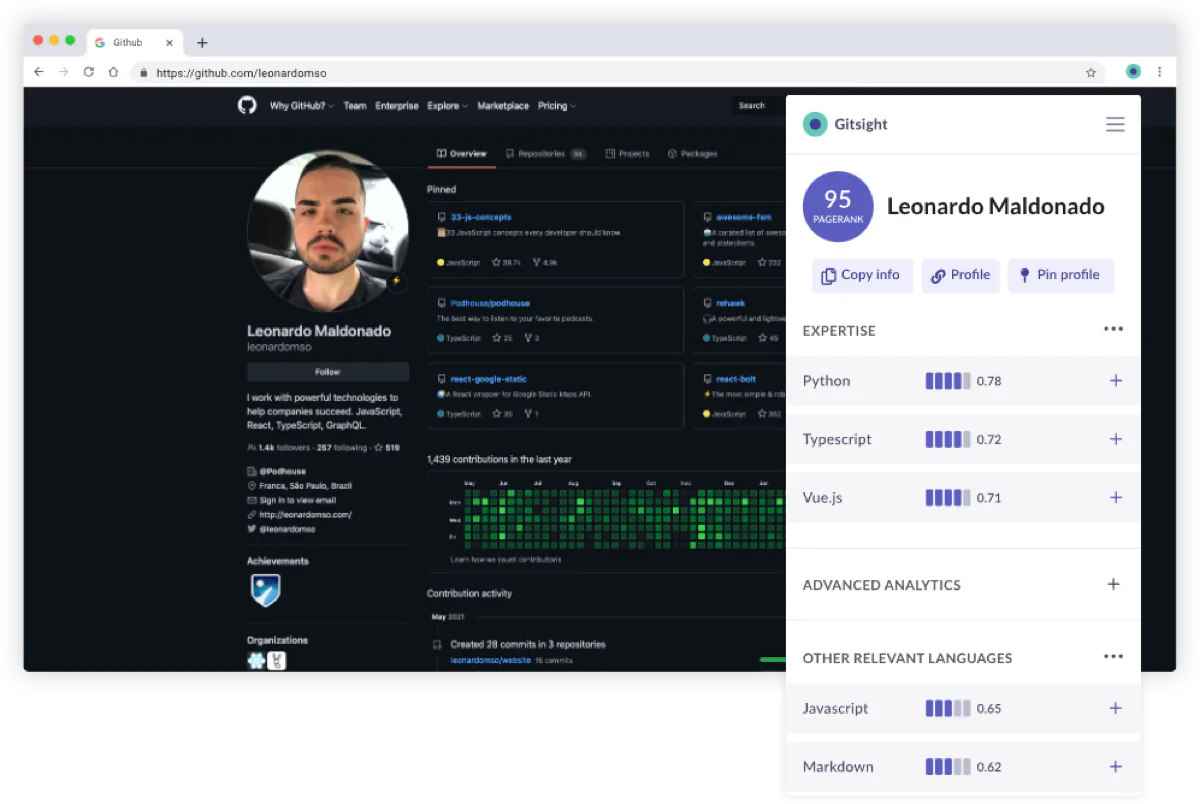
Contribution-based vetting is one direct response to this gap. Tools like Gitsight analyze open-source repositories across git, score every commit and pull request by type (comment, test, logic), and stack-rank contributors globally by domain expertise and ecosystem depth. The output is an assessment of what a developer has actually built and shipped, not what they claim on a resume. (Remotely built Gitsight for its own senior vetting pipeline.)
The bifurcation in one table
Different parts of the market are moving in opposite directions at the same time. A hiring plan that treats them as one number will misallocate budget and time.
The implication for a hiring plan is direct: you have to decide which row you are actually hiring into, and you have to staff the search accordingly. Treating a senior cloud security role like a junior backend role is how requisitions sit open for six months.
The recovery is real, just not the 2021 recovery
2025 to 2026 is a real recovery, but not a return to the 2021 to 2022 boom. Volumes are climbing from a 2025 trough, comp is moderating upward, and the bar is higher. Several independent signals point to a slow, uneven recovery rather than a continued collapse:
- Indeed: Software development listings reached a local low around May 2025, then climbed steadily for about ten months, ending up around 15% above that trough by early 2026, with growth particularly sharp from January 2026 onward.
- FRED: U.S. software developer job postings are up 15% from mid-2025 levels but still sit at roughly 85% of their 2023 peak.
- LinkedIn, February 2026: 72,781 "Software Engineer" openings (+0.4% month over month) and 53,654 "Software Developer" openings (-2.7% month over month), with monthly analysts noting the data does not support a collapse story.
Compensation is recovering but remains below the most inflated 2022 levels, particularly for mid-range roles. Senior and specialized roles, especially AI, cloud, and security, are seeing 5 to 7% comp inflation in 2025. The honest read from practitioners and recruiters: the market is "nowhere near" the COVID boom, but the AI-driven doom narratives about disappearing software jobs are not supported by the data either.
If your last hiring playbook is from 2022, it will not work in 2026. The funnel shapes are different, the bar is different, and the price you pay for misreading the segment is higher. Product cycles are shorter, competitor launches are faster, and a few months without the right engineering team is no longer a slowdown. It is a race you lose. The cost of not shipping has never been higher, and that cost starts with the hiring decision.
Why output is record-high while headcount is not
AI tools and mature DevOps practices have decoupled output from headcount. Teams ship more with the same or fewer engineers. The data makes this visible.
The structural implication: staff up for judgment, architecture, and verification, not code volume. That is the leverage AI does not replace. For the full skill-stack argument and an interview rubric you can run this quarter, read AI developer hiring and the shift from "can you code" to "can you think".
Is there a real developer shortage, or just noise?
There is a real, structural shortage for senior and specialized roles, even after layoffs. There is not a shortage of people who can write code at all.
The problem is the funnel. Most hiring processes start wide, collect volume, and then try to filter down to the right level. For senior and specialized roles, that filter is slow, expensive, and frequently wrong. You spend weeks screening for things that should have been pre-qualified: startup mindset, AI fluency, architecture depth, communication. By the time you find someone, a competitor has already moved. The teams that close these roles faster do not have a better filter. They start with a pool where that work is already done.
What this means for how growth-stage teams should hire
Three out of four IT firms plan to hire but cannot find enough skilled candidates, per ManpowerGroup. For startups the gap is sharper: senior-only hiring needs, no bandwidth to onboard juniors, stop-start funding cycles, and 5 to 7% comp inflation in AI and cloud roles all hit at the same time. The result is a headcount plan that assumes more engineers than the market will deliver under current constraints. Generic "post and pray" hiring is the most expensive response to that reality. Five shifts make the difference:
- Stop hiring against an average. Build the plan against the specific row in the bifurcation table you are actually hiring into. A senior cloud security role is not a generalized "engineering hire."
- Expand the geographic search before you fight for the same Bay Area or NYC senior. The global IT outsourcing market was valued at about $618.1 billion in 2025 and is projected to grow to over $752.0 billion by 2031, with nearshore LATAM models highlighted as a structural response, not just a cost play.
- Compress time-to-hire by pre-vetting. Senior time-to-hire of 3 to 6 months collapses fast when the network has already filtered for level, AI fluency, and startup mindset.
- Score for judgment, not typing speed. AI fluency, architecture sense, and verification skills now matter more than implementation speed.
- Build for retention, not transactions. With time-to-hire this expensive, churn is the silent killer of the engineering plan. Long-term engagement structures, transparent compensation, and ownership-aligned work are how you keep the seniors you finally land.
If you are still working out which engagement model fits your team, the staff augmentation vs EOR vs direct hire breakdown is a good first read.
How Remotely is built for the bifurcated market
The 2026 hiring market rewards a very specific stack: pre-vetted senior engineers, geographic flexibility, transparent comp, AI-fluent talent, and a partner who can move in days, not quarters. That is exactly what Remotely is built to deliver.
On the talent side, Remotely's network of 7,000+ pre-vetted developers is concentrated at IC4 to IC6, the seniority band where the 2026 market is actually short. Every developer is personally interviewed and profiled, with Gitsight adding contribution-based scoring on top. Vetting screens explicitly for AI fluency: candidates who can direct agents, evaluate output, and verify work. Companies see matched candidates within 48 hours.
On the engagement side, Remotely operates a cost-plus model. 100% of compensation goes to the developer, with a flat management fee on top, so you can see exactly what the engineer earns, what the margin is, and reward your highest performers without an opaque markup in between. Long-term engagement structure (three-month minimum contracts, embedded ownership) is why the average contractor tenure on Remotely is 18 to 24+ months, not the short cycles typical of traditional staff aug. And because Remotely is nearshore LATAM, time zones overlap with U.S. teams the way the bifurcated market actually demands, not the way old offshore models pretended to.
For a country-by-country look at where senior LATAM engineering talent is concentrated, including salary and seniority data, see the nearshore LATAM complete guide.
If you want to talk through what an AI Collaborator level senior engineer looks like in practice for your team, or test the model against a current open role, get in touch with Remotely.
Frequently asked questions
Is software developer hiring frozen in 2026?
No, not as a whole. The market is bifurcated. Junior and unspecialized roles have been compressed sharply since 2022, with U.S. software developer job postings down about 35% from their early-2024 peak, concentrated in entry-level openings. At the same time, senior, AI-fluent, and specialized roles in cloud, security, ML, and data are structurally scarce, with 87.5% of tech leaders calling hiring difficult or worse, and time-to-hire for senior roles running 3 to 6 months. The right framing is not frozen or booming, it is bifurcated: different parts of the market are moving in opposite directions and have to be hired against differently.
Is there really a software engineer shortage in 2026?
Yes, for senior and specialized roles, even after the 2022 to 2025 layoffs. IDC and ManpowerGroup analyses estimate the software engineer shortage will reach up to 90% of organizations by the mid-2020s, with the United States alone projected to face a gap of more than 1.2 million software engineers by 2026. The shortage is not about the total number of people who can write code. It is about experienced engineers with judgment, architecture sense, AI fluency, and the ability to operate in cloud, security, ML, and data domains.
Why does GitHub data say developer activity is booming?
GitHub's Octoverse 2025 shows record-high developer activity that is decoupled from headcount: more than 180 million developers on the platform, nearly 1 billion commits in 2025 (up 25% year over year), and 518.7 million pull requests merged (up 29% year over year). AI code assistants amplify the engineers who are already shipping. Controlled experiments suggest around 55% faster task completion, and about 80% of new developers on GitHub use Copilot within their first week. Output is rising even when headcount growth is modest, which is why aggregate developer activity looks booming while specific hiring funnels can look frozen.
Why do mid-level engineers feel squeezed in 2026?
New graduates come in with AI tools natively, while senior engineers carry architectural judgment AI cannot replicate. Mid-level engineers with 3 to 8 years of experience who optimized for implementation speed alone are compressed from both sides. Engineering leaders at The Pragmatic Summit in February 2026 described this as a "quiet crisis." Title and tenure are no longer reliable proxies for mid-level value in 2026. The market is paying for verifiable scope, AI fluency, and the ability to direct agents and verify output, not just years of experience.
How long does it take to hire a senior software engineer in 2026?
Typical time-to-hire for senior software engineering roles is 3 to 6 months, roughly double pre-pandemic timelines. A 2026 survey of 30 tech leaders found that 87.5% rated hiring skilled engineers as difficult or worse, with around half of companies wasting time interviewing up to 60% unqualified candidates. Teams that work with pre-vetted senior networks compress this dramatically because filtering for level, AI fluency, and startup mindset has already happened before the search begins.
Are startups actually unable to hire, or just paused?
Most startups have unmet hiring demand, not absent demand. Three out of four IT firms in 2025 plan to hire but cannot find enough skilled candidates, with average salaries and time-to-hire both rising. The "frozen" feeling at the startup stage comes from three constraints: senior-only hiring needs that shrink the candidate pool, limited bandwidth to onboard juniors, and stop-start funding cycles. The underlying demand is there. The supply path has to change.
Should we expand to nearshore hiring in 2026 to solve the shortage?
For most growth-stage teams, yes, intentionally and not just for cost. The global IT outsourcing market was about $618.1 billion in 2025 and is projected to grow to over $752.0 billion by 2031, with nearshore models highlighted as a structural response to senior talent shortages. Nearshore LATAM in particular gives U.S. teams overlapping time zones with senior engineers who fit growth-stage culture, which is exactly what the bifurcated 2026 market is short on. Pair it with pre-vetting, transparent compensation, and long-term engagement to avoid recreating the turnover problems of traditional staff augmentation.
What roles are hardest to fill in 2026?
Surveys consistently name the same shortlist: senior and staff engineers, AI and ML engineers, DevOps and cloud infrastructure specialists, cybersecurity engineers, and data engineers. These roles drive the 5 to 7% compensation inflation observed in 2025 and are the primary reason aggregated hiring data and individual team experience feel contradictory. A company can have hundreds of applicants for general backend roles and still leave a senior cloud security role open for six months. Both realities live in the same hiring funnel.
How should hiring teams plan against this market?
Plan against the bifurcation, not the average. Identify which row of the segment table each open role actually sits in (junior generalist, mid-level generalist, senior, or specialized). Build the search and budget around that segment's real supply reality. For senior and specialized roles, expand the geographic search early, pre-vet for level and AI fluency, and design for retention because re-running the search is the most expensive outcome. The teams that internalize the bifurcation are filling roles in weeks. The teams that average the headlines together are still waiting in month four.
Sources
BLS Occupational Outlook, Software Developers, QA Analysts, and Testers · GitHub Octoverse 2025