.svg)
.svg)


You stop most fake remote engineering candidates by running four independent control layers: profile consistency, adaptive interviews, document and reference controls matched to access tier, and one minimum verification path for every route into your ATS (including client referrals), because identity, location, and skill are different claims and no single tool proves all three.
For CTOs, engineering managers, and technical talent leaders at growth-stage startups who hire remote or nearshore engineers, those four control mechanisms only reduce risk when you run them across the real hiring pipeline: how profiles enter the ATS, who owns each interview, where ID and reference checks sit, and how partner or client referrals connect back to the same standards.
Hiring pipelines now move faster than many teams can document who said what in which interview. Public authorities and industry analysts describe fake or proxy candidates and identity abuse as a real operational risk, not a niche meme. The sections below turn the layered answer above into tables you can train against and partner rules you can put in contracts.
The resume is perfect. The LinkedIn is polished. Your CEO wants the seat filled before Q2. And something in the interview felt off, but you can't name it. By the time you finish this article, you'll know exactly why.
When time-to-offer outruns who you are hiring
Speed-first marketplaces and opaque staff aug often reward filling seats quickly. When hard questions wait until after heavy eng time is spent, the cost of a bad hire lands in production access, customer trust, or public incident response.
Proxy interviews and organized fraud show up in public reporting. U.S. authorities document fraudulent identities and proxy setups in remote IT hiring (FBI victim notice, DOJ coordinated actions). Vendor-neutral guidance treats identity abuse as an operational risk you plan for (DISA). None of that replaces fair, lawful process for your candidates. It explains why one friendly Zoom is not a full program.
Four control layers: how verification stacks before the offer
The rest of the article maps every table and checklist to these four buckets. If you know the buckets, you can skim the deep sections in any order.
- Profile: Read resume, LinkedIn, and application fields side by side for drift, gaps, and impossible timelines. You spend minutes here so you do not burn hours of staff or senior eng on candidates who already fail basic consistency.
- Interview: Run live technical depth (same fact asked two ways, one project traced end to end, constraints that move mid-problem). That pressure exposes scripted answers and proxy interviewers who cannot sustain detail.
- Verification: After the interview record is clear, use government ID, liveness where policy allows, and references tied to the same person who interviewed. Scale rigor to what you hand over next: repo access, customer PII, bank or payroll details, not a one-size badge for every role.
- Partners: Referrals, agency submissions, and “my client sent them” paths still land in your ATS. If that route skips Layers 1 to 3, you only moved the fraud to the door with the fewest documented checks.
This article lays out a four-layer framework to mitigate hiring fraud from profile through partners. AI in assessments (series (3) above) covers assessments only: live code, take-homes, tool rules.
What fails, what helps, and what is still not enough
Use this table in roadmap reviews: each row names a failure mode, a practical control, and the honest limit of that control.
Profile: signals, and what they do not prove
Layer 1 keeps expensive interview time focused on candidates who already passed basic consistency checks.
If signals stack: keep interviewing on standard path; do not leak client names, architecture, or internal tools until verification catches up.
Interview: in-session moves, and what they do not prove
Layer 2 is how you stress-test narrative and skill without pretending any one session proves identity by itself.
Live code, take-homes, IDE rules, and deepfakes are covered in AI in assessments (series (3)): environment rules, telemetry, per-stage AI policy. This table is the behavioral and structural interview layer you run alongside that technical window.
Verification: what each control proves, and does not
Layer 3 is the stage where identity and reference vendors each prove only a narrow slice, not a full read on the person. The table below keeps your team from over-reading a green badge.
Partners: clients, agencies, and referrals
Layer 4 is where partner, agency, and client paths feed the ATS. Most funnels are only as strong as the weakest path into the ATS, and client and referral routes are usually where that weakness appears.
A warm client or partner intro is useful for speed. It is also a new trust surface: you inherit someone else’s credibility without automatically inheriting their verification depth. Organized fraud consistently routes toward the path with the fewest documented checks, which is often the “friendly” path: referrals and warm intros where borrowed trust (someone you already know vouches) replaces documented checks in practice.
Pattern to treat as high risk: a candidate who is already in your interview pipeline with mixed or dubious signals, and who then starts referring others into your funnel, is not giving you “more warm intros.” They are multiplying borrowed trust onto people you have not run through the same minimum path. Route those names like new applicants, not as extensions of the same referral credit.
Practical guidance:
- Apply the same minimum verification to client-introduced candidates, agency candidates, and cold applicants unless you intentionally choose otherwise.
- If you must lighten a path, use a written exception, a named risk owner, and a short written statement of what residual gap you accept. Verbal “just this once” bypasses become the default route under calendar pressure.
- Treat referral chains, “they worked with us at a prior company,” and multi-hop intros as new applicants, not as pre-vetted trust. A lighter screen only relocates weakness; it does not remove it.
Traditional staff aug models: what fails first
In many traditional staff aug programs, scoreboards still track how many candidates reach your hiring managers, how many open roles get coverage, and how fast roles close (starts, placements, reqs closed). That is not automatically wrong. It becomes a problem when those numbers matter more than whether each hire cleared the same vetting bar. Then the operating default shifts to speed: clear the backlog, cover the plan, satisfy the quarter.
A big candidate database can look like strength, but without consistent human review it mostly adds volume, not proof, unless the same established framework runs on every path into your pipeline (Layers 1–4, or a written equivalent you actually enforce). When incentives reward speed over proof, teams default to fast checks under deadline pressure.
Without that framework (or with exceptions that quietly become the norm), the damage is not only a slow search when you finally tighten. You lose a clean audit trail: who sat in the interview, who cleared ID and references against the same bar, and whether anyone between you and payroll benefits when those answers stay fuzzy.
Some teams build every layer in-house. Others contract a partner that keeps ID verification, reference checks, background checks (where policy and role tier call for them), and human vetting to align profile and interview, not just headcount.
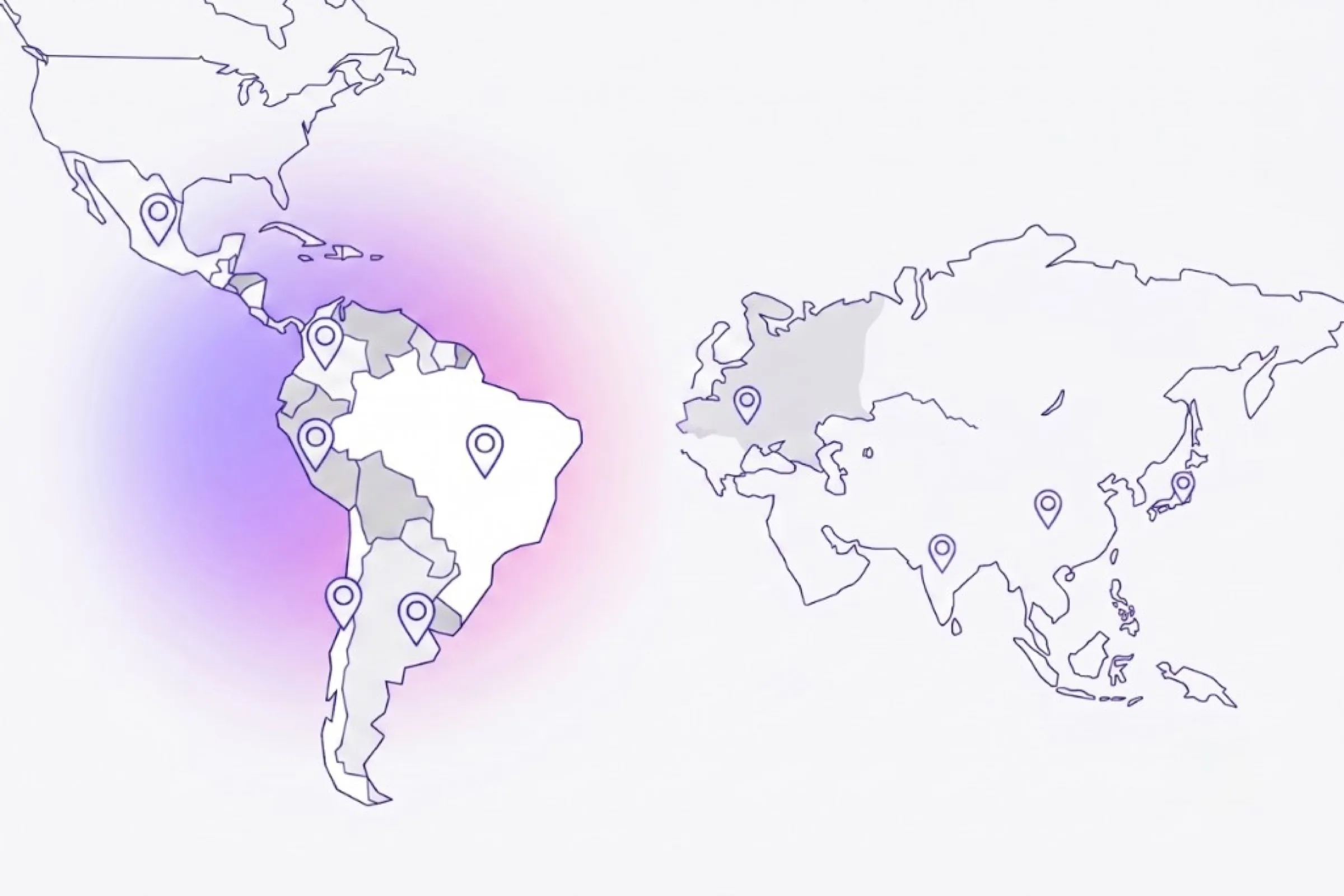
At Remotely, we run that kind of stack: ID verification, reference and background checks as standard procedure and human vetting throughout our process. On higher-risk paths we bind who we interview to who passes ID; when profile and interview disagree or high-risk signals stack, we add another review pass before the next step. We source candidates from our nearshore LATAM pool of 7,000+ vetted profiles, curated for growth-stage teams and startup DNA.
You still design your process: how many rounds, who runs technical depth, and how you test culture fit; we align ID, references, background, and human review to that path. If that combination matches what you would have built in-house after a bad near-miss, Tell us what you are hiring for or read Remotely for hiring teams.
Frequently Asked Questions
What are red flags for fake engineering candidates?
Think in clusters, not single typos. When the resume, LinkedIn, and what they say in the interview drift on titles, dates, or scope; when the profile reads like a keyword wall with little depth; or when straightforward questions about verification or background turn evasive, you are looking at a pattern worth taking seriously. None of that proves fraud on its own. It is a reason to tighten process and document what you saw, not to convict someone in real time. Industry writeups have been tracking how often these combinations show up as hiring risk grows(Benchmark IT).
When do you run identity verification?
Run it before trust jumps in a way you cannot unwind: production access, customer PII, money movement, or exposure to executives and board-level context. A single “verify everything at once” rule rarely fits; control strength should track how sensitive the role is and what you are about to hand over. Vendor-neutral guidance treats identity abuse as an operational risk, which is another argument for scaling checks with tier instead of treating ID as a generic checkbox (DISA).
How do you avoid discriminatory screening?
Anchor decisions in observable behavior and documented facts, with the same stages and expectations for everyone at the same access tier. That keeps the bar steady when the calendar is screaming. Have counsel review interview scripts and verification language so you do not drift into protected characteristics, and train interviewers on what belongs in ATS notes versus what should stay out.
Should client referrals skip your checks?
Only if someone with authority signs a written exception and you have a named risk owner for the gap. Anything softer becomes the path of least resistance, and referrals or “friendly” intros will find it before your security team does. The preventive posture matches cold applicants: one minimum bar into the same systems, or an explicit, owned exception (LeadDev).
How does Remotely reduce this risk?
Remotely keeps human interviewers and structured vetting in the loop, and binds who was screened to who completes identity checks, so you are not celebrating a green badge that never watched the call. You still design your process: how many rounds, who runs technical depth, how you test culture fit, and who gets an offer.
Sources
FBI: DPRK remote IT · DOJ: coordinated actions · LeadDev · Benchmark IT · DISA